


Uruguay: Senator Felipe Carballo tables bill for a state-run online gambling platform with private operators under licence
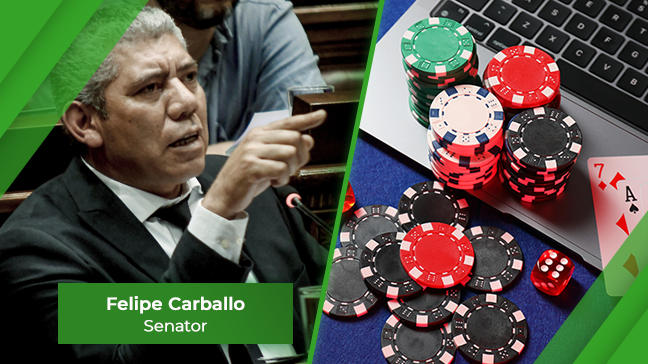
The proposal would create a State Online Gaming Platform under the Dirección Nacional de Loterías y Quinielas to offer and monitor online betting nationwide, while allowing private participation under a supervised licensing model and new control tools such as audits and a bettor registry.
Uruguayan senator Felipe Carballo has introduced a bill that would regulate online gambling in Uruguay through a mixed model combining state participation with private-sector engagement. At the center of the proposal is the creation of a State Online Gaming Platform placed under the supervision of the Dirección Nacional de Loterías y Quinielas (DNLQ), which would act as the public vehicle to offer, regulate, and monitor digital gambling services in the country.
The bill’s architecture is designed to clarify “who runs what” in online gambling. Under the reported outline, the state platform would be the core operator and oversight mechanism, while private operators could participate through a controlled licensing framework—meaning commercial brands would not operate in a legal vacuum but under technical and compliance requirements defined by the system.
Beyond the platform itself, coverage of the draft highlights the creation of a dedicated National Online Gambling Regulation Agency with powers to issue licences, audit platforms and algorithms, supervise transactions, manage a National Register of Digital Bettors, and sanction breaches. That design signals a policy goal that goes further than legalization: it aims to build traceability and enforcement capacity directly into how online gambling would function day to day.
The proposal arrives amid growing public discussion in Uruguay around unregulated online betting access, including concerns about consumer protections and underage exposure—issues that lawmakers and stakeholders increasingly cite as reasons to move toward a clearer national framework rather than leaving the market fragmented.
If the bill advances, the key debate is likely to focus on how restrictive or open the “mixed model” should be: how much of the activity the state platform runs directly, how broad the private licensing window becomes, and what safeguards (identity checks, limits, audits, advertising rules) are required to make the market both controllable and credible.
Share

-
 SOFTSWISS Survey 2026 Exposes a Gap in S...A new survey of 1,000 South African adul...September 17, 2026
 -
 GRAF 2026 Puts AI, Real-Time Monitoring ...Gaming regulators from across Africa hav...September 17, 2026
 -
 Blackjack Live Leads Amusnet’s Showcase ...From September 29 to October 1, Amusnet ...September 17, 2026


