


Uganda’s gambling regulator calls for smarter digital-era rules as online betting reshapes the market
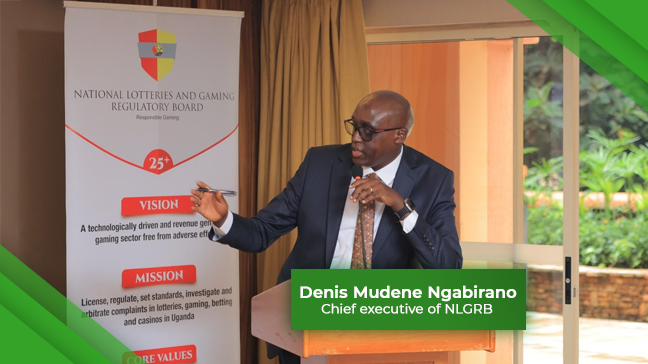
Denis Mudene Ngabirano, chief executive of Uganda’s National Lotteries and Gaming Regulatory Board, says the country needs more adaptive, technology-driven regulation as mobile-first betting and digital gaming continue to transform how gambling is accessed, monitored and enforced.
In commentary referenced by Focus Gaming News Africa and Uganda Online, Ngabirano argued that Uganda’s gambling sector has become overwhelmingly digital, with about 93 percent of activity now taking place online. He linked that shift to a young, mobile-connected population, the spread of smartphones and the integration of betting platforms with mobile money, which has made participation faster and more immediate.
The regulatory challenge, in his view, is that older monitoring models were built for physical betting outlets, not for high-volume digital transactions happening in real time. That is why he called for more adaptive regulation and pointed to the National Central Electronic Monitoring System as a key response, saying it improves transparency, helps reduce tax leakages and strengthens oversight over licensed operators.
That message is consistent with the regulator’s broader official position. On its own website, the NLGRB says it has deliberately repositioned itself as a technology-led regulator using data and digital systems to strengthen supervision and accountability, and it credits that approach with helping push declared gaming revenue from about UGX50.6bn in FY2019/20 to around UGX323bn by FY2024/25.
Ngabirano also tied future regulation to wider coordination across government. The recent reporting says the board is deepening cooperation with bodies such as the Financial Intelligence Authority, Uganda Revenue Authority and National Information Technology Authority to improve data sharing and track gambling-related financial flows, while also reviewing the legal framework to better address online gaming and emerging technologies.
For Uganda’s market, the significance of this position is clear. The debate is no longer only about licensing betting shops or policing physical machines, but about whether regulation can keep pace with a gambling economy that now lives on phones, payment apps and digital platforms. If Kampala follows through on the direction Ngabirano is outlining, the next phase of Uganda’s gambling oversight is likely to be defined less by traditional inspections and more by real-time monitoring, data sharing and tech-enabled compliance.
Share

-
 South Africa’s Content Market Is Crowded...South Africa’s gambling market continues...October 22, 2026
 -
 SOFTSWISS Group CSO Wins Top Global CISO...SOFTSWISS Group Chief Security Officer E...October 22, 2026
 -
 BF Games Puts Juicy Booster in the Spotl...BF Games has showcased Juicy Booster thr...October 22, 2026


