


Uganda’s gambling regulator and revenue authority move to tighten oversight after April 24 talks
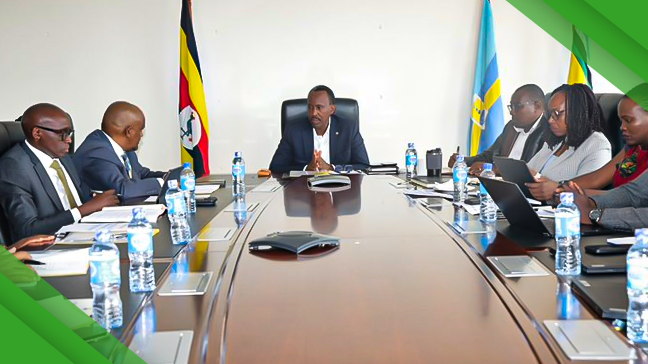
Uganda’s National Lotteries and Gaming Regulatory Board and the Uganda Revenue Authority have stepped up coordination on gambling oversight after a high-level meeting focused on operator compliance, tax monitoring, enforcement and the rollout of the National Central Electronic Monitoring System.
According to recent industry reporting, NLGRB chairman Kenneth Kitariko led a delegation of board members and senior management to meet URA Commissioner General John Musinguzi and his team on 24 April 2026. The discussions reportedly centred on operator compliance, tax obligations, enforcement coordination, NCEMS integration and wider sector priorities, suggesting that Kampala is trying to align regulation and revenue collection more closely as the gaming market expands.
The technical foundation for that cooperation was already visible earlier in the year. In an official update published on 28 January 2026, the NLGRB said its Regulatory Compliance department and IT unit had engaged URA’s gaming unit as part of efforts to operationalise the National Central Electronic Monitoring System. The Board said the system is designed to monitor gaming transactions and support transparency, accountability and regulatory oversight in the industry.
The same official notice made clear why the regulator considers URA a critical partner. NLGRB said close coordination with the tax authority is essential to ensure the NCEMS produces reliable data that supports both regulatory supervision and domestic revenue mobilisation, while also clarifying access to gaming data for compliance monitoring and stronger enforcement of both agencies’ mandates.
The timing is significant because Uganda has just moved to tighten the sector’s tax framework as part of its broader 2026/27 budget revenue package. Parliament said on 23 April 2026 that it had passed the Lotteries and Gaming (Amendment) Bill, 2026 and related tax measures to help raise revenue for the coming financial year, underlining that gambling oversight is now being linked more directly to fiscal performance as well as regulation.
In practical terms, the April 24 engagement points to a more integrated oversight model in Uganda. Rather than treating licensing, monitoring and tax collection as separate tracks, the regulator and revenue authority appear to be moving toward a shared compliance architecture built around transaction visibility, system integration and stronger enforcement against under-reporting or non-compliance. If that approach continues, Uganda’s next regulatory phase is likely to be defined less by basic supervision and more by data-driven control of the gambling market.
Share

-
 India Cuts $5.56 Billion in Gaming Tax D...Indian tax authorities have reduced tax ...October 19, 2026
 -
 FURIA Win Thunderpick World Championship...Brazilian esports organisation FURIA cla...October 19, 2026
 -
 Kenya Arbitrage Betting Report: October ...WorkBet data dated October 14, 2026 show...October 19, 2026


