


Turkey reviews illegal online betting action plan as enforcement shifts towards AI and financial tracking
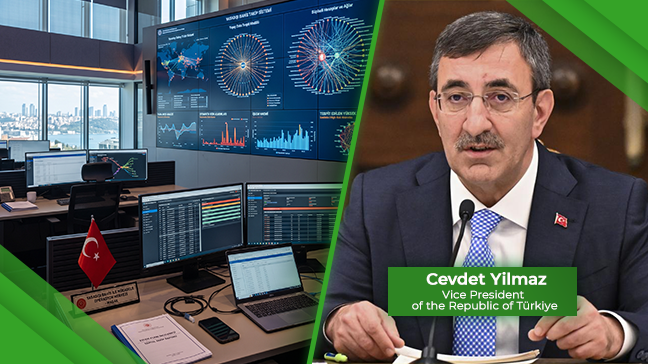
Turkey has reviewed progress under its Illegal Virtual Betting and Gambling Action Plan, with Vice President Cevdet Yilmaz calling for stronger use of artificial intelligence, financial monitoring and inter-agency cooperation to disrupt illegal platforms, payment networks and promotional channels.
Turkey is preparing the next phase of its campaign against illegal online betting and gambling after senior officials met at the Presidential Complex in Ankara on August 12 to review implementation of the government’s action plan. The meeting was chaired by Vice President Cevdet Yilmaz and included Interior Minister Mustafa Ciftci, Youth and Sports Minister Osman Askin Bak, Treasury and Finance Minister Mehmet Simsek and representatives of other state institutions.
The Illegal Virtual Betting and Gambling Action Plan has been in force since November 1, 2025. Its implementation is monitored by the Financial Crimes Investigation Board (MASAK) every two months, while coordination meetings chaired by the Vice President are held every four months. The framework treats illegal gambling not only as a public-order issue but also as a risk involving money laundering, organised crime, financial-system integrity and the protection of children and young people.
Yilmaz said authorities have strengthened their technical capacity to identify and restrict websites, servers and internet addresses used by illegal operators. However, because such platforms can rapidly move to new domains and infrastructure, he argued that existing detection methods should increasingly be supported by artificial intelligence and advanced data analytics.
The government is also targeting the communications infrastructure supporting illegal gambling. Measures introduced under the plan include limits on the number of mobile lines that can be registered to one person, tighter subscription rules for foreign nationals, stronger identity verification and controls on bulk SMS traffic used to direct consumers toward unauthorised gambling sites.
Financial enforcement remains another central part of the strategy. Authorities have increased monitoring of rented bank accounts, illegal payment infrastructure and methods used to transfer suspected criminal proceeds. Work is continuing on mechanisms allowing risky accounts to be identified, restricted or closed more quickly, while regulators seek more regular information from financial institutions.
Recent investigations illustrate the scale of the financial flows involved. In a July operation coordinated across 45 provinces, authorities identified more than 3.1 million transactions with a combined volume of approximately TRY84.3 billion in accounts linked to suspects in an illegal betting investigation. Police detained 190 people during that operation after financial movements were analysed using an AI-supported data-analysis programme.
The action plan also includes preventive measures aimed at minors and vulnerable consumers. Government agencies have been working on digital literacy, parental awareness and gambling-addiction education, while licensed services face increasing attention around age controls and identity verification. Turkey is also pursuing greater cooperation with foreign authorities because many illegal gambling networks operate across borders.
The August 12 review indicates that Turkey’s strategy is moving beyond the simple blocking of individual websites. The government increasingly intends to target the wider infrastructure that allows illegal gambling networks to operate, including payments, bank accounts, telecommunications and organised structures behind the platforms. The next stage will focus on completing existing measures, accelerating information sharing between agencies and introducing any additional legal and technical rules considered necessary.
Share

-
 Trinidad and Tobago Approves Remote Gamb...Trinidad and Tobago has completed parlia...October 5, 2026
 -
 Namibia Opens Gambling Reform Consultati...Namibia has launched nationwide consulta...October 5, 2026
 -
 Premier League Set to Return With More T...The Premier League resumes on October 10...October 5, 2026


