


Tinubu rejects Nigeria’s Central Gaming Bill, reaffirms Supreme Court ruling on states’ control of gambling
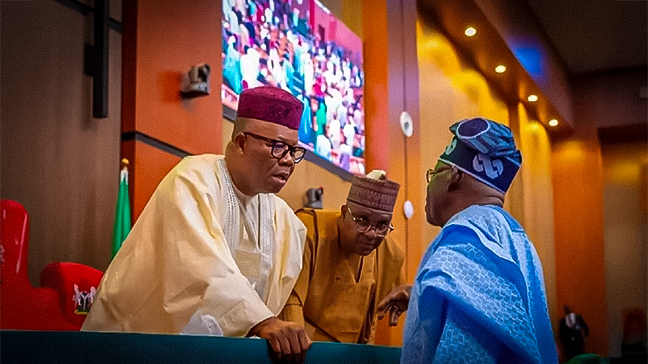
President Bola Ahmed Tinubu has formally refused to sign Nigeria’s Central Gaming Bill, insisting that lotteries and games of chance fall under the constitutional authority of state legislatures – not the federal parliament.
Nigeria’s president has drawn a clear line under months of constitutional debate by rejecting the Central Gaming Bill 2025, a federal proposal to create a single national framework for lottery and gaming regulation. Speaking on 19 December at the All Progressives Congress (APC) National Executive Committee meeting in Abuja, Tinubu said he would not assent to any law that recentralises control over games of chance.
The Central Gaming Bill, passed by the National Assembly earlier this month, seeks to repeal the already-nullified National Lottery Act 2005 and its 2017 amendment and replace them with a federal regime to regulate all forms of online and remote gaming across Nigeria and in the Federal Capital Territory (FCT). State regulators and legal experts have repeatedly argued that this approach clashes with a landmark 2024 Supreme Court judgment, which ruled that lotteries, betting and gaming are “residual matters” reserved for state Houses of Assembly, except in the FCT.
Tinubu explicitly aligned himself with the court’s position. In remarks captured by local media, he told party leaders to “forget centralised lotto” and “go and read the constitution again”, stressing that lottery and gaming “belong to the exclusive legislative matters of the states” and warning lawmakers “don’t tread near it”. He added: “I am a constitutional democrat… I read it that it was coming to me, I won’t sign it.”
His stance follows intensive lobbying from state authorities. Lagos State’s Attorney General, Lawal Pedro, and the Federation of State Gaming Regulators of Nigeria (FSGRN), which represents 24 state regulators, had both urged the president to block the bill, calling it an unconstitutional attempt to “repackage” the defunct National Lottery Act under a new name and re-assert federal control over gaming revenues.
By publicly rejecting the Central Gaming Bill, Tinubu has effectively confirmed that the 2024 Supreme Court ruling remains the final word on Nigeria’s gambling and lottery architecture: states retain primary legislative and regulatory authority, while the federal government’s role is limited largely to the FCT. For operators, investors and regulators, the decision brings crucial clarity after months of uncertainty – but it also means that navigating Nigeria’s gambling landscape will continue to depend on engaging with multiple state-level regimes rather than a single federal regulator.
Share

-
 Global Esports Federation Chief Visits K...Global Esports Federation President and ...September 12, 2026
 -
 Nigerian Bookmakers and African iGaming ...The Association of Nigerian Bookmakers a...September 12, 2026
 -
 Brazilian Presidential Candidates Split ...Brazil's regulated betting market has be...September 11, 2026


