


Philippines Closes More Than 8,000 Merchant Accounts Linked to Illegal Online Casinos
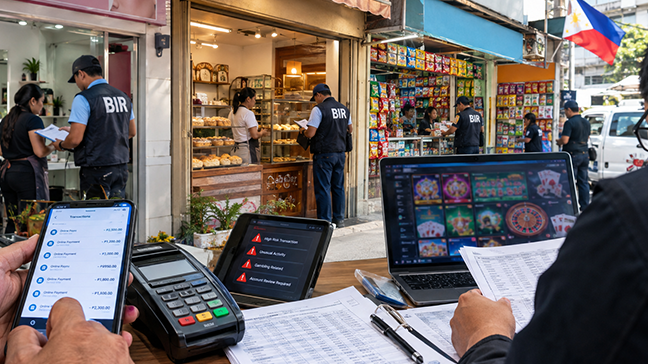
More than 8,000 merchant accounts have been shut down in the Philippines after authorities found that illegal online casinos were disguising gambling payments through businesses such as beauty salons, bakeries and small retailers.
The Philippines is tightening its control over digital payments after the Bangko Sentral ng Pilipinas (BSP) uncovered thousands of merchant accounts allegedly being used to channel money to unregistered and unlicensed online casino operators.
Accounts associated with more than 8,000 merchants have been closed following the investigation. Authorities found that gambling businesses were sometimes presented to payment providers as ordinary companies, including beauty salons, bakeries and small shops.
The unusual transaction patterns helped expose the scheme. Some merchants were receiving thousands of payments worth as little as PHP50, or around US$0.80, including transactions late at night and in the early morning when the businesses they supposedly represented would normally have been closed. Investigators later determined that some of the payments were connected to online casino bets.
BSP Deputy Governor Mamerto Tangonan said stronger merchant screening is necessary to protect consumers from fraud, illegal activity and money laundering. The central bank is now proposing tighter requirements for payment service providers, placing greater responsibility on them to understand exactly which businesses are using their platforms.
Under a draft regulatory framework, payment companies would have to identify the actual merchant behind each transaction as well as the person or company ultimately receiving the proceeds. They would also need more detailed information on business registration, licences and ownership and would be expected to maintain records allowing suspicious merchants to be identified more quickly.
The BSP is particularly concerned about merchant aggregators, which allow one intermediary to process payments for large numbers of smaller businesses. While the model has helped expand digital payments, several layers of intermediaries can make it harder to determine where money ultimately goes. The proposed rules would generally require casinos, gambling operators and businesses directly handling gaming funds to maintain direct relationships with authorised payment institutions and face enhanced due diligence.
The draft would also prevent payment providers from maintaining relationships with businesses involved in illegal activities or regulated sectors operating without the required licence. Transactions would have to be rejected or suspended when the actual merchant cannot be identified or the payment cannot be properly traced and reconciled.
Philippine gambling regulator PAGCOR has confirmed that it is aware of legitimate-looking businesses being used as fronts for unregistered online casinos and is cooperating with the central bank on the issue. Payment providers that repeatedly fail to prevent illegal operators from accessing their platforms could ultimately face regulatory action, including risks to their own licences.
The case shows that the Philippines is increasingly targeting the financial infrastructure behind illegal online gambling, rather than relying only on website restrictions. If the proposed BSP rules are adopted, payment companies will face considerably greater responsibility for identifying who is actually receiving gambling-related funds — potentially making disguised payment channels much harder for unlicensed casinos to maintain.
Share

-
 Amigo Gaming Unveils 88 Ace Royale: A Ca...Amigo Gaming introduces 88 Ace Royale, a...September 18, 2026
 -
 EGT Philippines’ Regional Director Maria...Mariana Manchina, Regional Director of E...September 18, 2026
 -
 GameBeat Launches Royal Rail Coins: A 3x...GameBeat introduces Royal Rail Coins, a ...September 18, 2026


