


Nigeria’s gambling industry gains clarity as Tinubu upholds state control of gaming
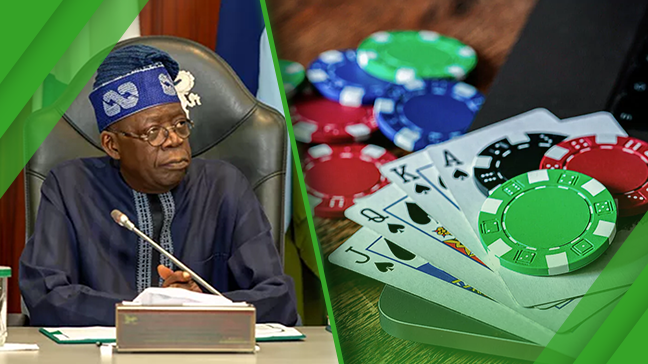
President Bola Ahmed Tinubu has refused assent to Nigeria’s Central Gaming Bill, confirming that lotteries, betting and online gambling will remain under state regulation and bringing long-awaited certainty to operators after months of constitutional debate.
Nigeria’s gambling sector has reached a decisive turning point after President Bola Ahmed Tinubu rejected the Central Gaming Bill 2025, a federal proposal that sought to create a single nationwide framework for lottery and gaming oversight. Speaking on 19 December at the All Progressives Congress (APC) National Executive Committee meeting in Abuja, Tinubu said clearly that he would not sign the bill, insisting that “centralised lotto” is unconstitutional.
The Central Gaming Bill had been passed by the Senate earlier in December and was intended to repeal the National Lottery Act 2005 and its 2017 amendment, replacing them with a federal regime for online and remote gaming across all states and the Federal Capital Territory. However, Tinubu stressed that the proposal clashes with the Supreme Court’s landmark 2024 judgment, which held that lotteries and gaming are “residual matters” reserved for state legislatures, not the National Assembly.
By refusing assent, the president has effectively closed the door on federal centralisation and reaffirmed that state-level authorities – such as Lagos State’s lotteries and gaming regulator and its counterparts in other states – remain the primary supervisors of betting, lottery and online gambling. State regulators and the Federation of State Gaming Regulators in Nigeria (FSGRN), which had warned that the bill violated both the Constitution and the Supreme Court ruling, have welcomed the decision as a victory for federalism and legal certainty.
For operators, the outcome removes a major source of uncertainty heading into 2026. Instead of facing overlapping federal and state licensing systems, gambling companies can continue to structure compliance, tax planning and product roll-outs around state-level frameworks, while monitoring any future attempts to revisit federal legislation. At the same time, Tinubu’s stance signals that any reforms to Nigeria’s fast-growing gaming market will have to respect the constitutional balance of powers and build on the Supreme Court’s 2024 precedent, rather than trying to reverse it through new centralising laws.
Share

-
 SOFTSWISS Survey 2026 Exposes a Gap in S...A new survey of 1,000 South African adul...September 17, 2026
 -
 GRAF 2026 Puts AI, Real-Time Monitoring ...Gaming regulators from across Africa hav...September 17, 2026
 -
 Blackjack Live Leads Amusnet’s Showcase ...From September 29 to October 1, Amusnet ...September 17, 2026


