


New Zealand Opens Expressions of Interest Process for Online Casino Licences
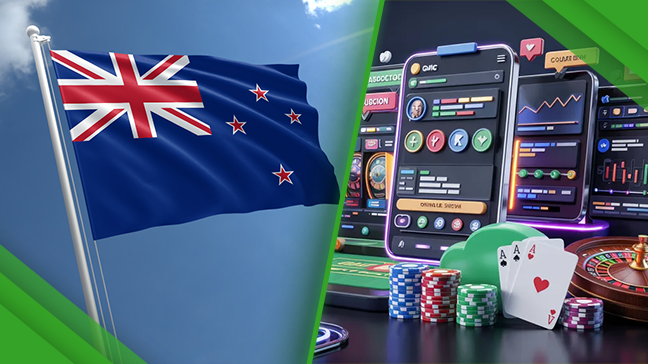
New Zealand has opened the first stage of its online casino licensing process, inviting expressions of interest from operators as the country moves toward a fully regulated digital casino market in 2027.
New Zealand has opened the expressions of interest process for online casino gambling licences, marking the first formal step in the country’s transition toward a regulated online casino market.
The Department of Internal Affairs has invited operators to submit expressions of interest under the Online Casino Gambling Act 2026. The process opened on 17 July 2026 and gives potential applicants until mid-August to complete the first stage of the licensing pathway.
The development is a major regulatory milestone for New Zealand. Online casino gambling is already used by New Zealand customers through overseas websites, but the new framework is designed to move the market from offshore access and limited domestic control into a licensed, supervised and compliance-based system.
Under the regime, up to 15 online casino gambling licences will be available. Each licence will cover a single brand and the platforms through which players interact with that brand. No operator will be able to receive more than three licences through the process.
The licensing pathway has three stages. First, operators must submit an expression of interest. If that EOI is accepted, the provider may move to the auction stage. Successful auction participants will then be able to submit a full licence application.
This structure means that submitting an EOI does not guarantee market access. Acceptance of an expression of interest only allows the operator to participate in the next stage. A licence will only be granted after the full application process, including an assessment of whether the operator is suitable and able to comply with all legal and regulatory requirements.
The GETS listing states that applicants must have access to at least NZD 7.5 million in capital. This requirement indicates that the government is seeking financially credible operators with the ability to meet compliance, technology, player protection and operational obligations.
The auction stage is expected to take place in September 2026, with licence applications opening in October. From 1 December 2026, providers that have not applied for a licence will be required to cease conducting online casino gambling in New Zealand. Providers with applications under consideration may continue operating during the assessment period, but without advertising.
The fully licensed regime is expected to be operational in 2027. Until then, New Zealand is operating through a transition period in which legal, technical and compliance systems are being phased in.
The regulations supporting the Act cover harm prevention and minimisation, consumer protection, record-keeping, advertising and marketing, fees, levies and operator obligations. These areas show that the government is not treating online casino licensing simply as a commercial market opening, but as a broader consumer-protection and enforcement reform.
Advertising is one of the most important areas for operators. At the current stage, online casino gambling advertising remains prohibited in New Zealand. Online casinos must not advertise their services to New Zealand customers until the licensing regime permits activity under the new rules.
For international operators, New Zealand’s approach creates both opportunity and constraint. The market will be limited, competitive and documentation-heavy. Operators will need to demonstrate not only commercial strength, but also regulatory readiness, responsible gambling systems, compliance history and a credible New Zealand-facing operating model.
The capital threshold and auction process may favour larger operators with established compliance infrastructure. However, the single-brand licence model and three-licence cap also prevent unlimited concentration, creating a controlled but competitive structure.
For the government, the reform is intended to address offshore gambling activity that already reaches New Zealand customers. By licensing a limited number of operators, the authorities can set clearer standards, monitor compliance, reduce illegal activity and require stronger protections for players.
For the industry, the opening of the EOI process is the point at which policy turns into market entry. Operators that want access to New Zealand’s regulated online casino sector must now engage formally with the licensing system, prepare documentation and demonstrate that they can meet the standards expected of a regulated gambling provider.
The next months will be decisive. The EOI stage will indicate the level of market interest, the auction will test commercial demand, and the licence application phase will determine which operators can move from ambition to legal operation. New Zealand’s online casino market is not fully open yet, but the race for licences has now begun.
Share

-
 Altenar Highlights Ice Hockey Early Payo...Altenar is highlighting its Early Payout...October 21, 2026
 -
 Slotegrator opens registration for free ...Slotegrator, a leading iGaming software ...October 21, 2026
 -
 QTech adds ELA Games to Global PlatformQTech, the leading game aggregator for e...October 21, 2026


