


Meta accused of allowing China-linked gambling scam ads to flourish on Facebook and Instagram
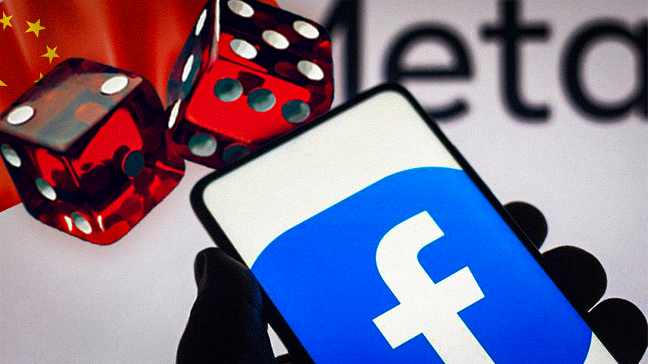
Meta is under fire after a Reuters investigation alleged that the company knowingly tolerated billions of dollars in ad revenue from Chinese scam campaigns – including illegal online gambling and high-risk investment schemes – rather than enforcing its own rules and risking a hit to profits.
A new special report from Reuters, based on internal Meta documents, says the company’s advertising revenue from Chinese customers soared to about $18.4bn in 2024 – more than 10% of its global sales. Meta itself calculated that around 19% of that income, over $3bn a year, came from ads promoting scams, illegal gambling, pornography and other prohibited content, yet senior executives decided against aggressive enforcement because of the expected “revenue impact”.
Although Facebook and Instagram are banned inside China, Beijing allows Chinese firms to buy ads targeting users overseas. According to the leaked material, Meta built a lucrative ecosystem of “top-tier” and “second-tier” Chinese resellers that helped clients push gambling apps, unlicensed casino sites, crypto schemes and fake investment platforms at users worldwide, including Chinese-speaking audiences in Asia and the diaspora.
In early 2024, Meta created a China-focused fraud unit that combined new detection tools with stricter human review. Within six months, the share of China ad revenue coming from violating content reportedly fell from about 19% to 9%. Later that year, however, an internal “strategy pivot” led to the team being broken up, a freeze on new Chinese partners was lifted and planned anti-scam safeguards were shelved – after which fraudulent spending bounced back.
A second Reuters experiment exposed weaknesses in Meta’s “Trusted Experts” partner programme. A reporter posing as an advertiser created blatantly illegal get-rich-quick crypto ads and approached agencies in Meta’s official Partner Directory. Three agencies – including firms in Hong Kong and Vietnam tied to major Chinese partners – agreed to help run the campaigns, offering access to privileged ad accounts in exchange for crypto payments. The fake ads, which Meta’s own AI tools helped optimise, ultimately ran for a week and reached more than 20,000 users across the US, Europe, India and Brazil before being shut down.
The revelations have triggered political blowback. In late November, US senators Josh Hawley and Richard Blumenthal urged the Federal Trade Commission and Securities and Exchange Commission to investigate Meta for allegedly profiting from scam advertising, citing examples of gambling sites, crypto fraud, payment scams and deepfake endorsement ads that continued to appear in Meta’s ad library. They called for potential penalties, profit disgorgement and tighter limits on high-risk advertising categories.
Meta disputes the framing of the reports, saying Reuters “mischaracterises” its internal data and strategy. The company insists it does not want scam ads on its platforms and highlights increased investments in safety teams and AI tools. Ahead of an anti-scam summit this month, Meta said user reports about scam ads had fallen by more than 50% in the last 15 months and that it removed over 134 million scam ads in the first half of 2025 alone. Critics counter that enforcement remains notably weaker for Chinese advertisers and that Meta’s choices continue to prioritise revenue from a key market over consistent consumer protection.
For regulators and licensed gambling operators, the controversy sharpens questions about how major platforms police marketing for illegal casinos and offshore betting sites, and whether tougher external rules – rather than voluntary policies – will ultimately be needed to curb scam-driven gambling promotion online.
Share

-
 Nolimit City discovers the true meaning ...October 20, 2026
 -
 Built for Speed: 3 New Sportsbook Featur...GR8_TECH has recently introduced the fas...October 20, 2026
 -
 Taiwan Blocks Kalshi and Coinbase Amid E...Taiwanese authorities have restricted ac...October 20, 2026


