


Kenya’s Online Betting Sector Records Highest Digital Fraud Risk in 2025
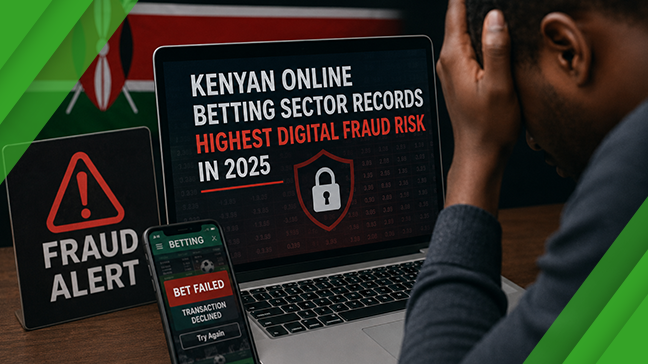
Online betting platforms in Kenya recorded the highest rate of suspected digital fraud among all sectors analysed by TransUnion in 2025, highlighting growing risks for operators, players and regulators in one of Africa’s most active digital gambling markets.
Kenya’s online betting sector recorded the highest rate of suspected digital fraud among all industries analysed in 2025, according to new research from TransUnion.
The report found that 15.6% of attempted transactions involving online gaming-related activity, including sports betting and poker, were flagged as potentially fraudulent. The sector also recorded a 97% year-on-year increase in the volume of suspected fraud attempts, the largest rise among all industries covered in the analysis.
The figures stand out because Kenya’s overall suspected digital fraud rate was lower than the global average. TransUnion found that 2.3% of digital transaction attempts involving consumers in Kenya were suspected of fraud in 2025, compared with a global rate of 3.8%. However, the gambling and betting segment remained significantly more exposed than the national average.
TransUnion’s data suggests that fraud risk is increasingly concentrated at the early stages of the customer journey. In Kenya, the highest suspected digital fraud rate in the consumer lifecycle occurred during account creation, followed by account login and financial transactions. For online betting operators, this makes identity verification, onboarding controls and account security especially important.
The report also shows that Kenyan consumers are facing more sophisticated digital scams across everyday online services. Among consumers who reported losing money to digital fraud, third-party seller scams on legitimate e-commerce platforms were the most common source of losses. However, betting platforms appear to be one of the main environments where fraudsters test identities, payment methods and account access tactics.
For Kenya’s regulated gambling market, the findings come at a time of broader regulatory change. The Gambling Regulatory Authority has been pushing for stronger oversight, including plans for a central real-time monitoring system that would give the state better visibility over transactions in the betting and gaming sector.
The rise in suspected fraud attempts may strengthen the case for tighter technical standards, improved data sharing, stronger KYC controls and closer cooperation between gambling operators, payment providers, telecom companies and regulators. It also creates pressure on licensed operators to show that they can protect users while maintaining fast and convenient digital access.
For the industry, the message is clear: fraud prevention is becoming a central part of gambling regulation and market credibility. As betting activity continues to move through mobile platforms and digital payments, Kenya’s operators will need to treat identity protection and transaction monitoring as core business requirements, not only as compliance obligations.
Share

-
 Global Esports Federation Chief Visits K...Global Esports Federation President and ...September 12, 2026
 -
 Nigerian Bookmakers and African iGaming ...The Association of Nigerian Bookmakers a...September 12, 2026
 -
 Brazilian Presidential Candidates Split ...Brazil's regulated betting market has be...September 11, 2026


