


Kenya Passes Finance Bill 2026 After Revising Tax Proposals
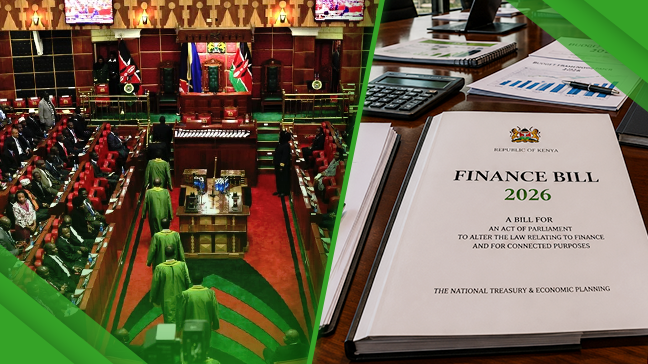
Kenya’s National Assembly has approved the Finance Bill 2026 after lawmakers amended several tax proposals, keeping the country’s betting and gaming sector focused on the possible return of a 20% tax on gambling winnings.
Kenya’s National Assembly has passed the Finance Bill 2026 after lawmakers revised several of the original tax proposals following public participation and committee review.
Members of Parliament approved the bill at its Third Reading on June 18, 2026, with 122 votes in favour and 40 against. The bill now awaits presidential assent before it can become law and form part of the government’s revenue framework for the 2026/27 financial year.
The vote followed weeks of debate over Kenya’s fiscal strategy, tax compliance measures and the government’s effort to finance a KSh4.8tn national budget. Lawmakers adopted amendments recommended by the Departmental Committee on Finance and National Planning, with several contentious measures either withdrawn or revised after public submissions.
For the gambling sector, the Finance Bill remains especially important because it reopens the debate over taxation of betting and gaming winnings. Earlier analysis of the bill indicated that it proposed a 20% withholding tax on gambling winnings for both residents and non-residents. It also introduced a definition of “winnings” as payouts from licensed operators, excluding the original stake or wager.
That definition is significant for Kenya’s betting market. Previous tax disputes often focused on whether taxation should apply to gross amounts, net winnings or withdrawals from betting wallets. By defining winnings more clearly, the bill seeks to reduce ambiguity, but it could also increase the tax burden on players and operators if applied alongside existing taxes on betting-related transactions.
The Gambling Regulatory Authority had urged Parliament to review the proposed treatment of winnings, warning that some provisions could be difficult to implement in practice. The authority argued that overly complex or overlapping taxation could create compliance challenges and increase pressure on the regulated market.
Kenya remains one of Africa’s largest betting markets, driven by mobile wagering, digital payments and strong consumer participation in sports betting. Any change in the taxation of winnings therefore has direct implications for licensed operators, players, tax collection and the competitiveness of the legal market.
Supporters of the bill argue that stronger taxation and clearer definitions can improve revenue collection and reduce loopholes in a fast-growing digital sector. For the government, gambling is part of a wider effort to broaden the tax base, improve compliance and capture revenue from sectors where money moves quickly through mobile and online platforms.
Critics, however, warn that higher gambling taxes can have unintended effects. If players feel that legal platforms are too heavily taxed, some may shift toward offshore or unlicensed betting sites, where consumer protection is weaker and tax collection becomes more difficult. This is a recurring concern across African gambling markets, where governments are trying to balance revenue growth with market sustainability.
The Finance Bill 2026 also arrives at a time when Kenya is strengthening gambling oversight more broadly. The Gambling Regulatory Authority has been pushing for stronger monitoring systems, better transaction visibility and improved cooperation between regulators, payment providers and other state agencies.
For operators, the bill’s passage means tax planning and compliance preparation will become more urgent once the final text is confirmed and presidential assent is granted. Companies will need to assess how any changes to withholding tax, definitions of winnings and reporting obligations affect their products, margins and customer communication.
For Kenya, the amended Finance Bill shows the difficult balance facing policymakers. The government needs more revenue, but the betting sector is highly sensitive to tax design. The final impact will depend on how the new rules are implemented, whether the gambling provisions remain intact in the enacted law and how regulators manage the risk of pushing players away from licensed platforms.
Share

-
 Philippines Closes More Than 8,000 Merch...More than 8,000 merchant accounts have b...September 18, 2026
 -
 Amigo Gaming Unveils 88 Ace Royale: A Ca...Amigo Gaming introduces 88 Ace Royale, a...September 18, 2026
 -
 EGT Philippines’ Regional Director Maria...Mariana Manchina, Regional Director of E...September 18, 2026


