


Kenya High Court allows most new gambling licensing rules to proceed but keeps fee and capital hikes suspended
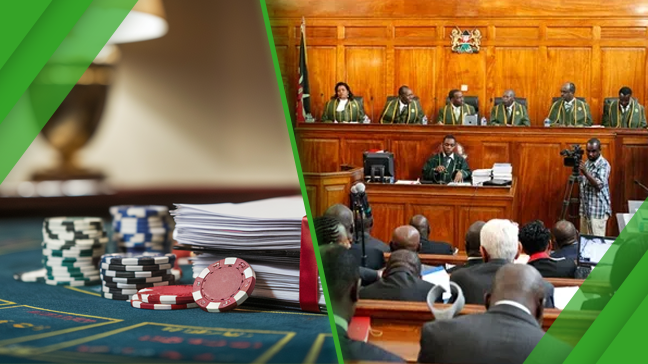
Kenya’s High Court has narrowed an earlier suspension of the Gambling Control (Licensing) Regulations, 2026, allowing most of the new framework to take effect while keeping disputed licence-fee increases and minimum capital requirements on hold pending a final ruling.
Kenya’s High Court has partially lifted a stay affecting the country’s new gambling licensing framework, allowing the Gambling Regulatory Authority of Kenya to implement most of the Gambling Control (Licensing) Regulations, 2026. However, the court has maintained the suspension of the revised licensing fees contained in the Second Schedule and the gambling capital requirements set out in the Third Schedule.
Justice W. Musyoka issued the ruling on August 7 in Judicial Review Case No. HCJR/E251/2026. The case was brought by Thomas Buckley Opar Owuor and Ken Brance against the Prime Cabinet Secretary and Cabinet Secretary for Foreign and Diaspora Affairs, the Gambling Regulatory Authority of Kenya and three other respondents.
The dispute began after the applicants challenged the Gambling Control (Licensing) Regulations, 2026, which were formally published as Legal Notice No. 111 of 2026 on June 29. The regulations were introduced under the Gambling Control Act, 2025 and establish detailed rules covering licence categories, applications, renewals, fees, financial capacity and other requirements for gambling businesses operating in Kenya.
On July 20, the High Court granted the applicants permission to pursue substantive judicial review proceedings and ordered that the grant of leave operate as a stay, temporarily preventing the entire licensing regulations from being implemented. The respondents subsequently asked the court to lift or modify that order so the regulator could continue carrying out licensing, consumer-protection, anti-money-laundering and enforcement functions.
In the August 7 decision, Justice Musyoka concluded that the applicants’ principal objections were directed at specific financial provisions rather than the regulations as a whole. Their challenge includes claims that the new licensing fees increased by between 200% and 49,900% compared with previous levels. The court therefore decided that a blanket suspension was broader than necessary.
As a result, only the increases in licence fees under the Second Schedule and the capital thresholds under the Third Schedule remain frozen. All other provisions of the Gambling Control (Licensing) Regulations, 2026 can now be implemented, enforced and applied by the relevant authorities.
This means the Gambling Regulatory Authority can continue processing regulatory matters and applying the wider licensing framework while the dispute over financial requirements remains before the court. The ruling also allows the regulator to continue work involving consumer protection, anti-money-laundering supervision, monitoring of unlicensed and offshore gambling operations, player-fund safeguards and data protection.
The financial provisions remain a significant issue for operators because they directly affect the cost of entering or remaining in Kenya’s regulated gambling market. The applicants argue that the higher fees and capital requirements could place substantial pressure on licensed businesses, while the government and regulator maintain that the new framework is necessary to fully implement the Gambling Control Act and establish stronger national oversight.
The current regulatory overhaul follows the adoption of the Gambling Control Act, 2025, which replaced Kenya’s previous gambling legislation and transferred oversight from the Betting Control and Licensing Board to the newly created Gambling Regulatory Authority. The reform represents one of the most significant changes to Kenya’s gambling regime in decades.
The substantive judicial review will now proceed through written submissions, with the parties directed to exchange their arguments by September 21. Judgment is scheduled for October 2, 2026. Until then, operators must comply with the parts of the new licensing framework that are now in force, while the disputed fee and capital provisions remain suspended.
The August ruling therefore reduces the immediate regulatory uncertainty created by the earlier blanket stay without resolving the most commercially sensitive aspects of the reform. The October judgment will be particularly important for licensed operators and potential market entrants, as it could determine whether Kenya’s substantially higher financial requirements become a permanent part of the country’s new gambling regime.
Share

-
 3 Weeks Until Sports Betting West Africa...As the 3-week countdown begins, the foca...September 26, 2026
 -
 Colombia Gambling Contributions to Subsi...Colombia’s gambling regulator Coljuegos ...September 26, 2026
 -
 South Korea Halts 236 Illegal Gambling S...South Korean authorities have disrupted ...September 26, 2026


