


India tax intelligence agency traces US$7.4 billion in illegal betting transactions
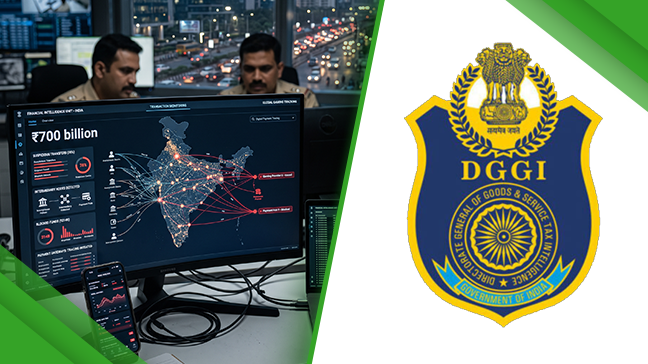
India’s Directorate General of GST Intelligence has identified around INR700 billion in transactions linked to illegal online gaming and betting networks and is proposing new payment-tracing requirements aimed at exposing the intermediaries used to move funds.
India’s Directorate General of GST Intelligence (DGGI) has detected approximately INR700 billion (US$7.4 billion) in transactions linked to illegal online gaming and betting during one financial year, highlighting the scale of financial activity continuing outside the country’s legal framework.
The figure emerged from a 14-month DGGI investigation into illegal online gaming and betting networks and the financial infrastructure allegedly used to route their funds. The agency has submitted its findings to the Central Board of Indirect Taxes and Customs (CBIC), while the investigation into potential revenue loss and tax evasion remains ongoing.
Importantly, the INR700 billion figure represents the total value of detected transactions, rather than operator revenue, profits or unpaid tax. According to officials cited by The Economic Times, the networks continued to process payments through intermediary merchant companies despite India’s prohibition on online money games.
The DGGI is now recommending that payment records capture the identity of the website that originally directed a user to make a payment. Investigators say the existing system often records only the merchant receiving the funds, allowing gambling platforms to conceal the link between a wager and the ultimate payment recipient by using proxy businesses.
Under the proposed approach, authorities would also be able to map bank accounts connected with GST-registered entities and identify accounts used to receive, transfer or layer funds. The recommendations are expected to require wider consultation with banks, payment gateways and aggregators because they could introduce additional customer-due-diligence and record-keeping obligations.
The investigation originally began as a probe into GST evasion by online money gaming companies before expanding into a broader review of the financial networks supporting illegal betting. DGGI had already intensified its action against offshore operators in 2025, when it said around 700 foreign online gaming entities were under scrutiny, 357 websites had been blocked and nearly 2,400 bank accounts had been blocked in separate enforcement cases.
India’s regulatory position has since become significantly stricter. The Promotion and Regulation of Online Gaming Act 2025 prohibits online money games as well as their advertising, promotion and facilitation. It also prohibits banks, financial institutions and other payment providers from processing transactions connected with such services. Implementing rules came into force on May 1, 2026.
For regulators, the latest findings illustrate why blocking websites alone may be insufficient. Illegal operators can use new domains and intermediary companies, while the movement of money can remain hidden behind apparently unrelated merchants. The DGGI’s proposed payment-tracing system therefore shifts enforcement toward the financial infrastructure supporting illegal betting, with the objective of identifying not only individual platforms but the networks that enable them to continue operating.
Share

-
 Altenar Highlights Ice Hockey Early Payo...Altenar is highlighting its Early Payout...October 21, 2026
 -
 Slotegrator opens registration for free ...Slotegrator, a leading iGaming software ...October 21, 2026
 -
 QTech adds ELA Games to Global PlatformQTech, the leading game aggregator for e...October 21, 2026


