


Egypt Challenges Refereeing After Dramatic World Cup Exit Against Argentina
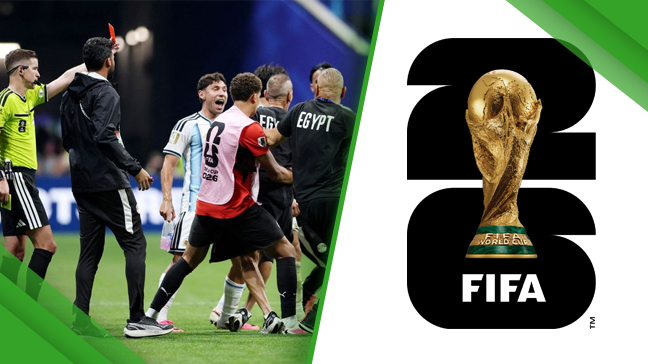
Egypt’s 3-2 defeat to Argentina in the Round of 16 has turned into one of the biggest refereeing controversies of the 2026 FIFA World Cup, with the Egyptian Football Association questioning several key decisions and the use of VAR.
Egypt’s historic World Cup run ended in dramatic and controversial fashion after a 3-2 defeat to Argentina in the Round of 16, a match that has now triggered strong criticism of the refereeing team and renewed debate over VAR consistency at the tournament.
The match in Atlanta had appeared to be heading toward one of the biggest shocks of the competition. Egypt led through Yasser Ibrahim’s first-half header and later doubled the advantage through Mostafa Zico, putting the African side close to a place in the quarter-finals.
Argentina, however, produced a late comeback. Cristian Romero scored in the 79th minute, Lionel Messi equalised shortly after, and Enzo Fernández completed the turnaround with a stoppage-time header. The result sent the defending champions into the next round, but the final score quickly became overshadowed by the controversy around several refereeing decisions.
The main flashpoint came before Egypt’s second goal, when Zico had another effort disallowed following a VAR review. Referee François Letexier was sent to the monitor and ruled that Marwan Attia had fouled Lisandro Martínez in the build-up. The decision caused frustration in the Egyptian camp, as the move had initially looked like a decisive moment that could have given Egypt a stronger lead.
Late in the match, Egypt also appealed for penalties in two separate incidents. The first involved contact between Alexis Mac Allister and Hamdi Fathy in the Argentina penalty area. The second came when Mohamed Salah went down after a challenge from Julián Álvarez shortly before Argentina’s winning goal. Both situations were checked and cleared by VAR, but Egypt argued that the incidents were not reviewed with the same standard applied to the disallowed goal.
Head coach Hossam Hassan strongly criticised the officiating after the match, saying his team had not been treated fairly. He suggested that pressure around Argentina and the presence of Lionel Messi had influenced the wider atmosphere around the game, although no evidence of match manipulation has been presented.
The Egyptian Football Association also released a statement saying it could not remain silent about the refereeing decisions and the use of VAR. The federation said several key incidents raised serious questions about consistency, fairness and transparency in one of the most important matches in Egypt’s football history.
From FIFA’s perspective, the case highlights a broader problem for the tournament. VAR was designed to reduce clear and obvious errors, but in high-pressure knockout matches it can also become a source of deeper distrust when similar incidents appear to be interpreted differently by players, coaches and fans.
The controversy is unlikely to change the result, with Argentina now preparing for the quarter-finals against Switzerland. For Egypt, however, the match will be remembered not only as the country’s deepest World Cup run, but also as a painful exit that intensified the debate over how major tournament refereeing decisions are explained, reviewed and trusted.
Share

-
 Global Esports Federation Chief Visits K...Global Esports Federation President and ...September 12, 2026
 -
 Nigerian Bookmakers and African iGaming ...The Association of Nigerian Bookmakers a...September 12, 2026
 -
 Brazilian Presidential Candidates Split ...Brazil's regulated betting market has be...September 11, 2026


