


Dominican Republic Revises Lottery Taxes as Anti-Crisis Plan Advances
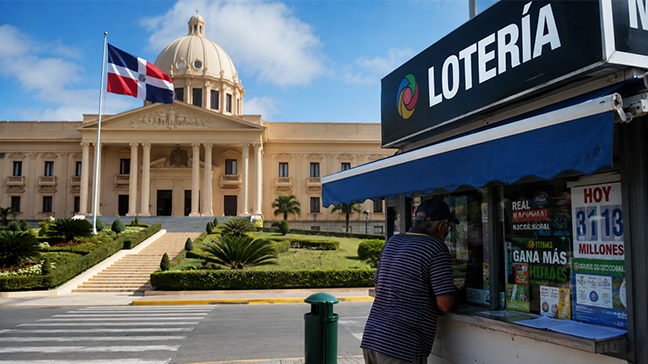
The Dominican Republic has revised parts of its gambling tax package as the government’s anti-crisis plan moves forward, reducing the proposed annual tax on lottery shops while keeping broader increases for betting and casino activity.
The Dominican Republic has moved forward with its anti-crisis fiscal package after revising several gambling-related tax measures, including the levy applied to lottery shops.
The package, promoted by the government as a response to international economic pressures, aims to generate between RD$40bn and RD$50bn in additional revenue while avoiding an increase to the ITBIS value-added tax. The measures form part of Law 30-26, which was approved by Congress and later promulgated by President Luis Abinader, according to local reporting.
For the gambling sector, one of the most notable changes concerns bancas de lotería, or lottery shops. The Executive’s original proposal would have raised the annual single tax on lottery shops to RD$120,000. However, lawmakers reduced that amount by RD$35,000, setting the final figure at RD$85,000 per year. Lottery shops will also be subject to an operating right of RD$200,000.
The revision shows that the gambling sector remained one of the most sensitive parts of the fiscal debate. While the government sought to increase revenue from games of chance, legislators softened some of the proposed increases before the package advanced.
Lawmakers also adjusted the tax treatment of lottery and gambling prizes. The initial proposal contemplated a 25% tax on winnings from lotteries, lottery shops, sports betting shops, fracatanes and other betting or draw-based games. The approved version applies the 25% rate only to prizes above RD$600,001. Winnings between RD$200,001 and RD$600,000 will be taxed at 15%.
Other gambling segments will still face higher taxation. Sports betting shops located in major areas such as the National District, Santo Domingo, San Cristóbal, Santiago, Duarte, Puerto Plata and La Vega will pay RD$500,000 annually. Those operating in other parts of the country will pay RD$300,000 per year. Casinos will also face higher monthly payments based on the number of gaming tables in operation, with rates ranging from RD$70,000 to RD$100,000 per table depending on scale.
The package also updates the taxation of slot machines, which will pay between RD$15,000 and RD$18,000 per month depending on location.
For the Dominican gambling industry, the final version represents a mixed outcome. Operators avoided some of the sharpest proposed increases, especially in the lottery-shop segment, but the overall direction remains one of higher fiscal pressure and stronger state revenue capture.
The changes also come as the Dominican Republic continues efforts to formalise and reorganise the gambling market. Earlier government measures focused on regularising lottery shops, betting agencies and other gambling businesses, with a stronger role for tax authorities in verifying compliance.
For operators, the new framework will require closer attention to margins, licensing status and tax planning. Smaller lottery and betting businesses may be especially affected, as fixed annual charges can weigh heavily on retail operations with limited profitability.
For the government, the reform reflects a broader strategy: gambling remains a politically sensitive but attractive source of revenue in a period of fiscal pressure. By revising lottery taxes while keeping higher charges across the wider sector, the Dominican Republic is trying to balance revenue needs, industry resistance and the formalisation of a fragmented gambling market.
Share

-
 GameBeat Launches 3 Joker Crowns: Three ...GameBeat has released 3 Joker Crowns, a ...October 18, 2026
 -
 Premier League Matchweek 6: Manchester C...The Premier League returned after a thre...October 18, 2026
 -
 Botswana Prioritises Local Investors Ahe...Botswana’s Gambling Authority is prepari...October 17, 2026


