


Costa Rica’s JPS reviews lottery controls after audit flags irregularities
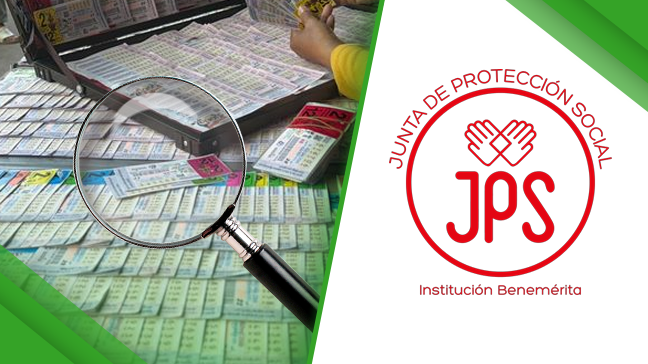
Costa Rica’s Junta de Protección Social is reviewing and strengthening its procedures for unsold and returned lottery tickets after the Comptroller General found weaknesses in traceability, destruction records and prize-payment controls.
Costa Rica’s Junta de Protección Social has said it is reviewing and improving its protocols for the registration, handling and destruction of unsold or returned lottery tickets. The response follows a special audit by the Contraloría General de la República, which identified several weaknesses in the way the institution manages lottery fractions that are reported as not sold.
The audit, identified as DFOE-BIS-IAD-00001-2026 and issued on April 30, examined the JPS’s controls over the receipt, custody, system invalidation, physical destruction and possible reactivation of lottery tickets. The review covered the period from June 2023 to December 2025 and included 358 national and popular lottery draws.
One of the most sensitive findings was that prizes were paid on lottery fractions that had previously been reported as unsold and destroyed. According to Costa Rican media citing the CGR report, 67 fractions were detected in this condition. Although the total amount involved was described as small, around ₡194,000, the Comptroller warned that the case exposed a recurring risk in the institution’s systems and records.
The CGR also found weaknesses in destruction documentation, including the absence of valid signatures supporting destruction records. Other concerns included delays of up to 27 days in the destruction of consigned lottery tickets, limited security at regional offices and external collection centres, weaknesses in counting and electronic scanning processes, and inconsistencies in controls for the receipt of lottery leftovers.
These findings are important because unsold lottery tickets represent a direct integrity risk. If a ticket is recorded as not sold but is not effectively invalidated or destroyed before results are known, it could later be used to claim a prize improperly. The CGR noted that traceability in this process is essential to protect the resources that finance more than 500 social welfare programmes supported by JPS revenues.
In response, the JPS said the findings refer to specific situations but acknowledged the need to review and improve existing protocols. The institution said external oversight helps strengthen internal controls, supervision and traceability, and added that even an isolated case should be treated as an opportunity for preventive improvement.
The measures under review include a comprehensive risk assessment, improvements to information systems, stronger transaction control, reinforced operational supervision during lottery returns and better internal scanning, validation and verification of unsold tickets. The JPS also said it is formalising an administrative procedure for any case involving an attempt to collect a prize from lottery reported as unsold, with the goal of reconstructing the custody chain and identifying possible responsibilities.
For Costa Rica’s lottery sector, the case is not only an internal control issue. It goes directly to public trust in lottery draws and in the social purpose of JPS operations. If the reforms are implemented effectively, they should reduce fraud risks, improve accountability and strengthen confidence that prizes are paid only on legitimately sold tickets.
Share

-
 Botswana Prioritises Local Investors Ahe...Botswana’s Gambling Authority is prepari...October 17, 2026
 -
 Amigo Gaming Launches Black Flag Fortune...Amigo Gaming has released Black Flag For...October 16, 2026
 -
 Amusnet Expands South African Footprint ...Amusnet, a leading global provider of pr...October 16, 2026


