


Brazilian Congress debates new allocation of betting revenue for sports and public security
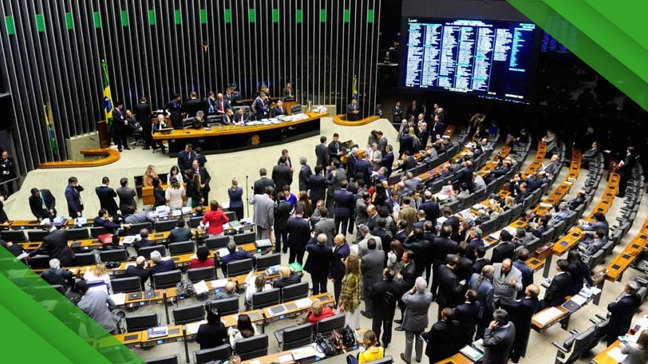
Brazilian lawmakers are reviewing several proposals that would redirect part of the revenue from licensed betting and online gaming to sports programmes and public security funds, showing how the newly regulated market is becoming an important source of political and budgetary interest.
Brazil’s regulated betting market has entered a new stage of political debate, as Congress examines proposals to reshape how revenue from fixed-odds betting and online gaming should be distributed. The discussions cover both sports funding and public security, two areas increasingly presented by lawmakers as priority destinations for money generated by the licensed betting sector.
One of the latest proposals is PL 6124/2025, introduced by Senator Leila Barros. The bill would amend Law No. 13,756/2018 to direct part of the proceeds from fixed-odds betting to the National Military Sports Subsystem. According to the Senate’s official summary, the measure would allocate 1% of fixed-odds betting revenue to the Brazilian Military Sports Commission, which is responsible for military sports programmes. The amount would come from the share already assigned to the Ministry of Sports, without increasing total public expenditure.
The proposal was approved by the Senate Sports Committee on May 6 and then moved to the Economic Affairs Committee, where it was awaiting the appointment of a rapporteur as of May 7. Its supporters argue that the funds could strengthen high-performance sport, Paralympic sport and social projects involving children and people with disabilities.
A separate sports-related proposal, PL 6133/2025, seeks to create the Federal University of Sport in Brasília. The Chamber of Deputies approved the bill in February and sent it to the Senate. The project is intended to support education, research, innovation and professional training in sport science, including management, high-performance sport and inclusion in parasport.
Public security is also becoming a major focus in the betting revenue debate. In March, the Chamber of Deputies approved the Public Security Constitutional Amendment, known as PEC 18/2025, in a second round of voting. The proposal passed by 461 votes to 14 and was sent to the Senate. Among its provisions, the amendment would allocate part of the revenue from sports betting and online gaming to the National Public Security Fund and the National Penitentiary Fund.
Under the approved text, the allocation would be phased in from 2026 to 2028 until reaching 30% of the applicable betting revenue. The calculation would be made after deductions for prize payments, income tax on winnings and operators’ gross revenue. The measure does not create a new tax on licensed operators, but reallocates part of the revenue that would otherwise be distributed to other public bodies and programmes.
The debate shows that Brazil’s betting framework is now moving beyond licensing and taxation into a wider discussion about public policy funding. Since the regulated market began operating, lawmakers have increasingly viewed betting revenue as a tool to finance areas such as sport, education, public security and social programmes. Industry media reported that federal tax revenue linked to betting reached R$3.4 billion in the first quarter of 2026, reinforcing the sector’s growing fiscal importance.
For operators, the immediate effect of these proposals may be limited if they involve redistribution rather than higher tax rates. However, the political signal is important: betting revenue is likely to remain under constant pressure as different sectors seek a share of the regulated market’s proceeds. The challenge for Brazil will be to create a stable funding model that supports public priorities without making the legal market less competitive against illegal or offshore operators.
Share

-
 Amusnet Expands South African Footprint ...Amusnet, a leading global provider of pr...October 16, 2026
 -
 BetOnGames takes the stage with Joker Mi...BetOnGames, part of BETCORE, has release...October 16, 2026
 -
 Manchester United Crisis Deepens as Lisa...Manchester United defender Lisandro Mart...October 16, 2026


