


Brazilian bill would use “bets tax” to fund income tax exemption for teachers
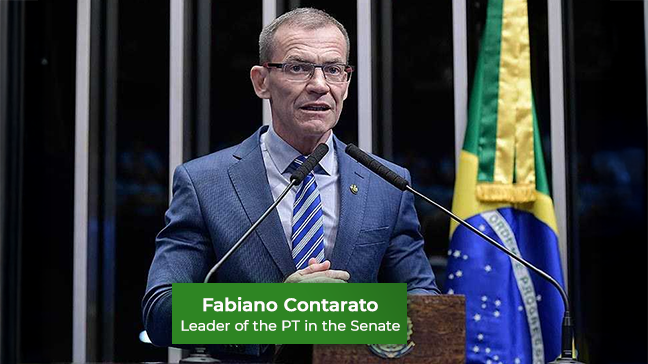
Brazil’s Senate is examining Bill 5.143/2025, which proposes financing income tax relief for teachers earning up to R$10,000 a month by earmarking revenue from the federal tax on fixed-odds betting (bets).
A new proposal in Brazil’s Senate would channel federal revenue from fixed-odds betting to pay for targeted tax relief for teachers. Bill 5.143/2025, introduced by Senator Fabiano Contarato (PT–ES), amends Income Tax Law 7.713/1988 to grant full personal income tax (IRPF) exemption to basic and higher-education teachers whose monthly income of up to R$10,000 (around US$1,887) comes exclusively from teaching.
To preserve fiscal balance, the bill explicitly links this tax expenditure to proceeds from the fixed-odds betting tax created under Law 14.790/2023, which regulates sports betting and online gaming in Brazil. The text states that the loss of income tax revenue “shall be compensated” by the federal levy on these so-called bets, meaning that a share of gambling taxation would be earmarked for education professionals.
The measure is framed by its author as part of a broader drive for “tax justice” that recognises the role of teachers while tapping a recently regulated, fast-growing sector to fund the benefit. Contarato argues that the fiscal impact will be relatively modest, since it is confined to teachers under the R$10,000 threshold, but says tying the exemption to betting tax receipts gives the proposal a clear compensation mechanism at a time when Brazil is tightening other tax incentives and raising rates on high-income taxpayers and betting operators.
The bill is still at an early stage and “aguarda tramitação” (awaits formal processing) in the Senate, where it will be assigned to committees before any floor vote. Gambling and lottery operators will be watching closely, as the initiative reinforces a broader policy trend: using Brazil’s expanding bets tax base not only to bolster general revenues, but also to finance socially targeted programmes, from education to public security.
Share

-
 Global Esports Federation Chief Visits K...Global Esports Federation President and ...September 12, 2026
 -
 Nigerian Bookmakers and African iGaming ...The Association of Nigerian Bookmakers a...September 12, 2026
 -
 Brazilian Presidential Candidates Split ...Brazil's regulated betting market has be...September 11, 2026


