


Brazil Senate committee backs phased GGR tax hike to 18% by 2028
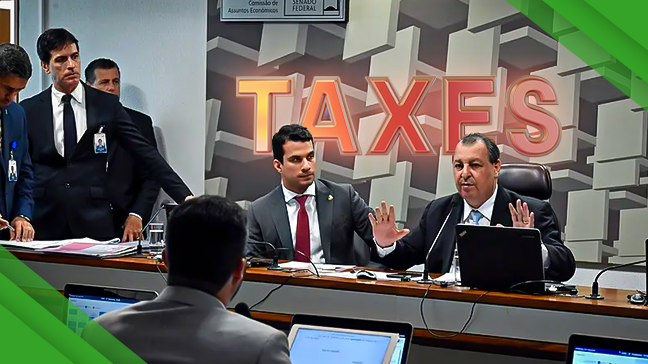
Brazil’s Senate Economic Affairs Committee has approved a compromise bill to raise the federal tax on gross gaming revenue from 12% to 15% in 2026–2027 and 18% from 2028, tightening the fiscal framework for licensed betting and iGaming operators while avoiding an immediate doubling of the rate.
Brazil’s gaming and betting operators are facing a higher tax bill after the Senate’s Economic Affairs Committee (Comissão de Assuntos Econômicos, CAE) endorsed a phased increase in the federal levy on gross gaming revenue (GGR). Under Bill PL 5,473/2025, the current 12% rate on licensed fixed-odds betting and online gaming would rise to 15% in 2026 and 2027, before reaching 18% from 2028 onwards.
The committee’s approval, secured by a strong majority, is being presented as a compromise after an earlier proposal to jump directly from 12% to 24% drew heavy criticism from industry stakeholders. Operators and analysts warned that such a steep increase would erode margins for compliant brands and hand a competitive advantage to unlicensed offshore sites that pay no local tax. In response, rapporteur Senator Eduardo Braga reworked the text to introduce the gradual 15–18% ladder, arguing that the state must raise revenue without “punishing” companies that chose to enter the regulated market.
The revised bill keeps the GGR base definition intact: the tax is calculated on total stakes received minus prizes paid out to bettors. This remains the flagship federal charge on Brazil’s regulated betting market, sitting on top of corporate income tax and social contributions that also apply to operators. Government projections suggest the gradual hike could add billions of reais in extra revenue between 2026 and 2028, with the additional funds earmarked primarily for social security and health spending. The federal executive would also have the option to transfer part of the incremental revenue to states, municipalities and the Federal District to offset other tax cuts.
PL 5,473/2025 will now move to the Chamber of Deputies for further analysis, unless senators lodge an appeal to force a floor vote in the upper house. If ultimately approved and signed into law, the new rates would start applying on the first day of the fourth month after publication, giving operators a short but clear runway to adapt pricing, product investment and marketing strategies.
Industry commentators note that the GGR rate is only one part of Brazil’s overall tax “stack” on betting, which also includes social contributions on financial and payment institutions closely linked to the sector. The same bill proposes higher CSLL rates for fintechs and payment providers, contributing to a broader fiscal push by President Luiz Inácio Lula da Silva’s government as it seeks to fund an ambitious social spending programme estimated at around R$300bn in 2026. This cumulative pressure has revived debate over how far the state can increase gambling-sector taxation without undermining channelisation and the long-term sustainability of the newly regulated market, which only opened in 2025.
For operators and investors, the CAE vote provides both a warning and a measure of visibility: headline tax pressure is set to rise, but in a staged fashion that offers time for recalibration. The next key test will be in the Chamber of Deputies, where lawmakers will decide whether to confirm the compromise path to 18% or reopen the debate over how much Brazil should extract from its fast-growing betting and iGaming industry.
Share

-
 SBC and VNLOK Announce Strategic Partner...SBC and Vergunde Nederlandse Online Kans...October 21, 2026
 -
 Nolimit City discovers the true meaning ...October 20, 2026
 -
 Built for Speed: 3 New Sportsbook Featur...GR8_TECH has recently introduced the fas...October 20, 2026


