


Brazil Moves to Ban Fixed-Odds Betting Nationwide as 506 Suspected Illegal Sites Are Taken Offline
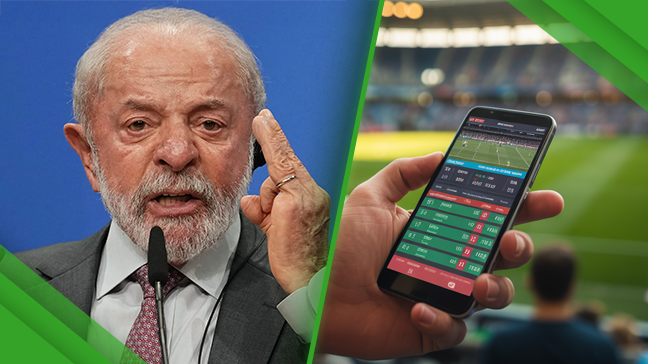
Brazil has begun dismantling its regulated fixed-odds betting market after a new provisional measure banned sports betting and online casino-style games nationwide. Just two days after the measure was issued, authorities announced the removal of 506 websites suspected of offering bets illegally.
Brazil has launched one of the most significant reversals of gambling policy seen in a regulated Latin American market, moving to prohibit fixed-odds betting across the country only after establishing a federal licensing system for the sector.
President Luiz Inácio Lula da Silva signed Provisional Measure No. 1,394 on September 25. The measure prohibits the operation, offer, intermediation and advertising of fixed-odds betting throughout Brazil, covering both bets on real sporting events and online games based on virtual events. The prohibition also applies to operators based abroad when their services are offered to users located in Brazil.
The rules extend beyond the federal market. State and Federal District authorizations for fixed-odds betting are also covered, while existing concessions, permits and licenses are scheduled to be extinguished 30 days after publication of the measure. New gambling authorizations can no longer be issued.
A transition period is already under way. Since September 25, operators have been prohibited from accepting new deposits. Players have until 23:59 on October 5 to access betting platforms and withdraw remaining balances, while betting websites and applications are due to become unavailable in Brazil from October 6. Open bets that have not been settled by the deadline are to be cancelled and the stakes returned in full.
The government is also unwinding the advertising presence built around Brazil’s betting market. No new betting advertising, sponsorship or promotional agreements may be contracted following publication of the measure, while previously running advertising must be removed by October 5. The measure prohibits betting marketing across physical and digital media.
Enforcement began almost immediately. On September 27, a joint task force involving the Ministry of Justice and Public Security and the Ministry of Finance announced that 506 websites showing signs of irregular betting activity had been taken offline. Authorities said the operation is intended both to interrupt access to unauthorized platforms and to prevent operators from simply replacing blocked sites with new domains.
Monitoring also found that gambling advertising continued to circulate after the measure entered into force. Brazil’s Cyber Operations Laboratory identified around 1,960 Google advertisements linked to seven domains between September 25 and 27. On Meta platforms, investigators documented seven advertisements, including two that began running after the new prohibition had already taken effect. Authorities stressed that some older advertising remained within the permitted transition period, so not every advertisement identified represented a confirmed violation.
A separate investigation into Telegram found 43 active channels and groups promoting betting and online casino games, with a combined audience of 212,634 members. Nine of those channels had more than 10,000 members and together accounted for 172,359 users. The authorities said the groups promoted gambling platforms through registration links, supposed betting “signals”, casino strategies and claims of potential returns.
The new policy represents a dramatic change for a market that had spent the previous years moving in the opposite direction: building a federal regulatory framework, issuing operator authorizations and developing enforcement mechanisms intended to separate licensed companies from illegal platforms. Provisional Measure 1,394 now provides for those existing fixed-odds authorizations to be terminated and remains under legislative consideration.
For the gambling industry, the next few weeks will be crucial. Brazil must now manage the withdrawal of licensed operators, return player balances, remove extensive sponsorship and advertising arrangements and prevent offshore platforms from filling the space left by the regulated market. The speed with which authorities targeted hundreds of suspected illegal domains shows that enforcement will be a central part of the new model, but the longer-term test will be whether Brazil can keep demand from migrating to operators outside the legal system.
Share

-
 Manchester City Reportedly Found Guilty ...Manchester City have reportedly been fou...September 28, 2026
 -
 Kenya Arbitrage Betting Weekly Report: S...WorkBet statistics for September 18–24, ...September 28, 2026
 -
 REEVO Partners with Market Games to Intr...REEVO has announced a partnership with M...September 28, 2026


