


Botswana Backs Nigeria’s Push for Pan-African Gambling Regulatory Council
Botswana has endorsed a Nigerian proposal to transform the Gaming Regulators Africa Forum into a more formal Pan-African Council of Gaming Regulators, potentially paving the way for common standards on licensing, consumer protection, anti-money laundering and responsible gambling across African markets.
Botswana has backed a proposal led by Nigerian regulators to create a more formal continent-wide structure for gambling oversight as African authorities look for stronger ways to coordinate regulation of rapidly expanding online and mobile gaming markets.
The initiative would see the existing Gaming Regulators Africa Forum (GRAF) evolve into a Pan-African Council of Gaming Regulators (PACoGR). Botswana's Gambling Authority has endorsed the proposal, although the new body has not yet been formally established. The plan is expected to be presented for formal adoption at GRAF's Annual General Meeting in December 2026.
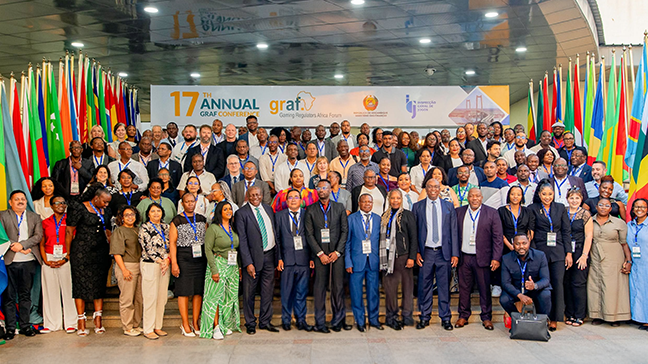
The proposal emerged during the 17th GRAF Annual Conference, held in Maputo, Mozambique, from September 14 to 17. Bashir Are, chief executive of the Lagos State Lotteries and Gaming Authority, presented a paper titled “Cooperative Federalism in Nigeria: A Lesson for Africa” and argued that regulators need deeper cooperation as digital gambling increasingly crosses national borders.
Are proposed moving GRAF beyond its current forum structure toward a more institutionalised continental council capable of establishing minimum regulatory standards across African jurisdictions. During the conference, the Lagos State Lotteries and Gaming Authority was also confirmed as a full jurisdictional member of GRAF, while Are joined the organisation's Board of Trustees.
Botswana Gambling Authority CEO Moruntshi Kemorwale said the proposed transformation comes as mobile and online gambling continues to change the regulatory landscape. Botswana believes a more unified structure could strengthen cooperation between national authorities and improve their ability to respond to new technologies and cross-border gambling activity.
Among the areas identified for greater harmonisation are licensing standards, consumer protection, anti-money laundering controls and responsible gambling requirements. Kemorwale also stressed the need for stronger cooperation against offshore and illegal operators, an issue that has become increasingly difficult for individual regulators to address independently as gambling platforms operate across multiple jurisdictions.
Cross-border enforcement is already moving beyond discussion in some markets. Lagos and Botswana have previously developed cooperation under which regulators can take action where an operator is licensed in one jurisdiction but operates illegally in another. Supporters of the PACoGR proposal see wider information sharing and coordinated enforcement as a way to reduce the ability of unlicensed operators to exploit differences between national regulatory systems.
The proposal would build on GRAF rather than establish a completely unrelated organisation. Founded as a platform for cooperation among African gaming authorities, GRAF already allows regulators to exchange information, discuss policy challenges and work toward greater regulatory harmonisation. Botswana has been involved in the forum since its early development and hosted its 14th annual conference in Gaborone in 2023.
Kemorwale has also called for African regulators to make greater use of technology and data. He advocated centralised monitoring systems capable of giving authorities more timely visibility into gambling activity, alongside technology-based tools for identifying indicators of potential gambling harm and improving player protection.
The December meeting will therefore be an important test of how much support exists for moving African gambling regulation from informal cooperation toward a more structured continental model. A PACoGR would not automatically eliminate the significant differences between national gambling laws, but common minimum standards and stronger cross-border coordination could become increasingly important as Africa's digital gambling sector grows beyond the practical reach of individual jurisdictions.
Share

-
 iGaming Club Hosts Its Third Webinar on ...iGaming Club by AffPapa has held its thi...September 29, 2026
 -
 Manchester United Post Seventh Straight ...Manchester United generated a club-recor...September 29, 2026
 -
 100 Thieves Sweep T1 as Chinese Teams St...100 Thieves opened their VALORANT Champi...September 28, 2026


