


Yamal, Mbappé and Spain’s Award Sweep Define the Stars of the 2026 World Cup
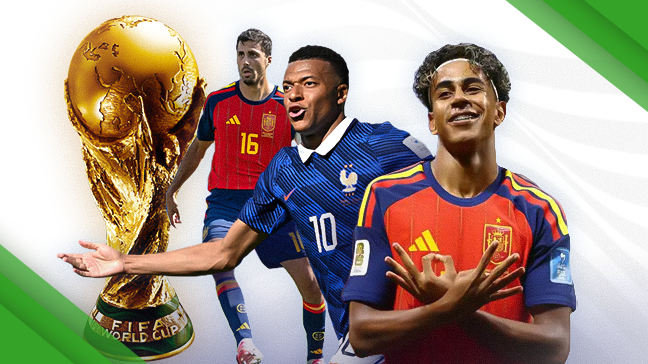
Spain’s World Cup triumph produced a new generation of global stars, with Lamine Yamal making age-record history, Rodri leading the tournament’s awards and Kylian Mbappé finishing as the top scorer despite France missing the final.
The 2026 FIFA World Cup ended with Spain lifting the trophy, but the tournament will also be remembered for the individual stars who shaped its story. From Lamine Yamal’s historic rise to Kylian Mbappé’s goalscoring dominance, the first 48-team World Cup produced a wide cast of defining figures.
The most symbolic achievement belonged to Lamine Yamal. At 19 years and six days old, the Barcelona and Spain winger became the youngest player ever to win both the UEFA European Championship and the FIFA World Cup. Having already won Euro 2024 with Spain as a teenager, Yamal added the world title in 2026 and confirmed his place as the face of Spain’s new generation.
Yamal did not need to dominate every match with goals to define the tournament. His value came from the pressure he created, the defenders he pulled out of position and the tactical attention he demanded. In a Spain team built on balance, possession and control, Yamal gave the side unpredictability and width. His record is not just about age; it is about impact at the very highest level before turning 20.
Spain’s collective superiority was reflected in FIFA’s individual awards. Rodri won the Golden Ball as the tournament’s best player, completing a campaign in which he controlled midfield rhythm, protected Spain’s defensive structure and dictated tempo in decisive matches. His award reinforced the idea that Spain’s title was built not on one attacking superstar, but on control and intelligence.
Unai Simón won the Golden Glove after Spain conceded only one goal in eight matches. His tournament was unusual because Spain’s defensive system often reduced the volume of shots he faced, but his concentration and reliability were essential whenever opponents broke through. His award belongs as much to Spain’s defensive structure as to his individual quality.
Pau Cubarsí received the FIFA Young Player Award, giving Spain another major individual honour. The 19-year-old defender played with unusual maturity, helping Spain maintain one of the strongest defensive campaigns in World Cup history. His recognition underlined how Spain’s future is not limited to Yamal: the team has elite young talent across the pitch.
Kylian Mbappé remained the tournament’s most dangerous goalscorer. The France captain won the Golden Boot with 10 goals, despite France falling short in the semi-finals. He also moved to 22 career World Cup goals, becoming the top scorer in the history of the men’s tournament. Even without a place in the final, Mbappé’s individual campaign confirmed his status as the defining World Cup forward of his era.
Lionel Messi also remained central to the tournament narrative. Argentina reached the final, and Messi’s performances earned him the Silver Ball and Silver Boot. Yet the final defeat to Spain gave his World Cup story a bittersweet ending. After the triumph in Qatar in 2022, the 2026 final felt like the passing of the crown from Messi’s Argentina to Yamal’s Spain.
Ferran Torres became the hero of the final. His extra-time goal against Argentina will now stand alongside Spain’s greatest World Cup moments. Like Andrés Iniesta in 2010, Torres scored the decisive goal in a 1-0 final victory, securing Spain’s second world title and turning himself into a permanent part of national football history.
Emiliano Martínez also left the final with a remarkable individual mark. The Argentine goalkeeper made 12 saves, a reported World Cup final record, keeping Argentina alive despite Spain’s heavy pressure. In a match where Argentina offered little in attack, Martínez became the main reason the final lasted into extra time.
Jude Bellingham and Erling Haaland were also among the tournament’s major attacking names. Bellingham won the Bronze Boot after scoring seven goals and edging Haaland on the assist tie-breaker. Haaland’s seven-goal campaign gave Norway one of the tournament’s strongest individual stories, even if the team did not reach the final stages.
The awards and records show the dual nature of the 2026 World Cup. Spain won through collective balance, but the tournament was still shaped by individuals: Yamal as the teenage record-breaker, Rodri as the midfield brain, Cubarsí as the defensive prodigy, Mbappé as the goalscoring machine, Messi as the fading legend and Torres as the final’s decisive hero.
In the end, the 2026 World Cup may be remembered as a generational handover. Messi’s era did not end with another trophy, while Yamal’s may have only just begun. Spain’s dominance, Mbappé’s scoring records and the rise of a new young core suggest that international football is entering a new cycle — one defined by tactical discipline, youth, and stars who are already rewriting history before reaching their peak.
Share

-
 India Cuts $5.56 Billion in Gaming Tax D...Indian tax authorities have reduced tax ...October 19, 2026
 -
 FURIA Win Thunderpick World Championship...Brazilian esports organisation FURIA cla...October 19, 2026
 -
 Kenya Arbitrage Betting Report: October ...WorkBet data dated October 14, 2026 show...October 19, 2026


