


Tunisia Proposes 60% Tax on Games and Competitions in 2027 Finance Bill
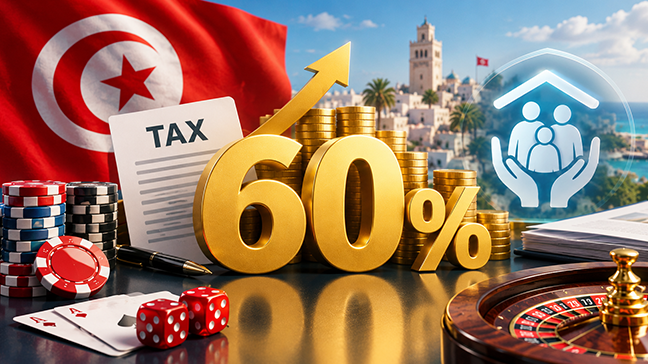
Tunisia plans to increase the tax on certain games and competitions from 40% to 60% under its proposed 2027 Finance Bill, with additional revenue intended to strengthen the country's social security system.
Tunisia is considering a significant increase in taxation on games and competitions as part of its draft Finance Bill for 2027, potentially raising the applicable rate by 20 percentage points.
Under Article 24, paragraph 3, of the proposed legislation, the existing 40% tax would increase to 60% of the participation price for covered games and competitions, including activities accessed through communication technologies.
The current levy was established under Article 17 of Finance Law No. 48 of 2024 and subsequently extended through Finance Law No. 17 of 2025 to cover games and competitions conducted using digital communication channels, including telephone and SMS-based participation.
The proposed increase forms part of broader fiscal measures aimed at strengthening Tunisia's social security financing. Additional revenue from gaming-related taxes, alongside higher duties on certain consumer products and foreign travel, would contribute to a dedicated social security funding account.
However, the government has not published an estimate of the additional revenue expected from the measure. The available documentation also does not establish whether the higher rate would apply to every category of online gambling and sports betting.
The Finance Bill was submitted to Parliament on October 14 and referred to the Finance and Budget Committee on October 16. The proposed increase remains subject to parliamentary approval and has not yet entered into force.
If adopted, the measure would increase the tax rate on covered gaming activities by 50% relative to its current level. The reform could raise operating costs for affected businesses and influence pricing strategies, depending on how the final provisions are implemented.
Tunisia's proposal reflects a broader effort to increase fiscal revenue from digital activities while supporting public social programmes. Its eventual impact on the gaming industry will depend on the final scope of taxation and the outcome of parliamentary discussions.
Share

-
 Premier League Matchweek 8: Man City Suf...The eighth round of the 2026/27 Premier ...October 26, 2026
-
 Altenar Powers Wildz Group’s Entry into ...Leading sportsbook provider Altenar is p...October 26, 2026
-
 QTech begins distributing CreedRoomz to ...QTech, the leading game aggregator for a...October 26, 2026


