


The International 2026 Returns to Shanghai as Dota 2 Looks for a New Global Boost
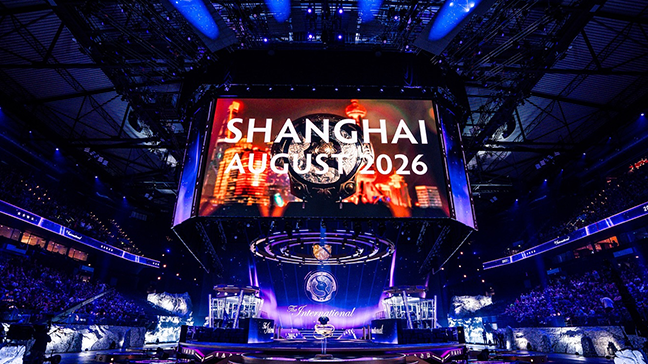
The International 2026 will bring Dota 2’s biggest tournament back to China, giving Shanghai a central role in the game’s competitive future and creating a major moment for esports business, viewership and betting markets.
The International 2026 is set to become one of the most important esports events of the year as Dota 2’s flagship tournament returns to Shanghai.
Valve has confirmed that the 15th edition of The International will welcome the world’s best Dota 2 teams to China, with the main arena event scheduled for August 20–23 at the Oriental Sports Center in Shanghai. Sixteen teams will compete for the Aegis of Champions, with participants coming through direct invitations, Open Qualifiers and Regional Qualifiers.
The return to Shanghai is highly symbolic for Dota 2. China last hosted The International in 2019, when Shanghai staged one of the largest esports events of that year. Since then, The International has moved across different regions, while the competitive balance of Dota 2 has shifted heavily toward Europe and other international contenders. Bringing TI back to China gives the region a chance to reconnect with one of the tournaments that helped define its esports identity.
For Chinese Dota 2, the event carries both opportunity and pressure. China has long been one of the most important regions in the history of the game, producing legendary players, major organisations and some of the most passionate fans in esports. However, the region has not won The International since Wings Gaming lifted the trophy in 2016. A home-country TI could provide extra motivation for Chinese teams trying to reclaim global relevance.
From a business perspective, Shanghai is a powerful host city. It offers strong event infrastructure, a large esports audience, developed live-event capabilities and historical ties to Dota 2. A successful TI in Shanghai could help strengthen confidence in China as a market for premium esports events at a time when many tournament organisers are looking for reliable commercial hubs.
The tournament also arrives during a busy year for global esports. Esports World Cup, Esports Nations Cup, VALORANT Champions, League of Legends Worlds and other major circuits are competing for attention from fans, sponsors, publishers and betting operators. In this environment, The International must prove that Dota 2 remains one of the strongest premium esports products.
For the betting industry, The International remains one of the most important Dota 2 events of the calendar. TI traditionally creates deep markets around match winners, map handicaps, series scores, hero picks, Roshan timings, first blood and other in-game outcomes. The longer the tournament progresses, the more important live data, draft analysis and risk management become.
At the same time, Dota 2 betting is complex. Unlike simpler match-based markets, Dota 2 can swing dramatically through drafts, lane matchups, item timings, buybacks, Roshan fights and late-game decision-making. This makes the event attractive for experienced bettors, but it also increases the need for reliable odds models and strong integrity monitoring.
The International 2026 also matters for data providers and integrity services. High-profile Dota 2 events generate significant betting volume, and every major tournament requires accurate live feeds, fast settlement, market suspension tools and monitoring for suspicious activity. As esports betting becomes more mature, events like TI are increasingly treated like top-tier sports products.
The prize pool has not yet been fully defined publicly, but the commercial value of The International goes beyond prize money. The event brings together global viewership, team branding, publisher control, sponsor visibility, merchandise, live attendance and betting-market activity. For many stakeholders, TI is still the tournament that best represents Dota 2’s global identity.
Shanghai 2026 may therefore become a turning point. If the event succeeds, it could reinforce China’s role in the global esports map and give Dota 2 new commercial momentum. If Chinese teams perform well, the tournament could also revive one of the game’s most important regional storylines.
The conclusion is clear: The International 2026 is not just another Dota 2 championship. It is a test of whether Dota 2 can renew its connection with China, compete for attention in a crowded esports calendar and remain one of the most valuable products for fans, sponsors and betting markets.
Share

-
 BetFury Integrates Swapped Connect to Ma...BetFury, a leading crypto casino, has in...October 23, 2026
 -
 Amigo Gaming Launches Spooky Sweets: A C...Amigo Gaming has released Spooky Sweets,...October 23, 2026
 -
 1spin4win celebrates the spooky season w...1spin4win, an established classic slot p...October 23, 2026


