


Thailand Blocks 13,888 World Cup Gambling Pages in 18 Days Using AI
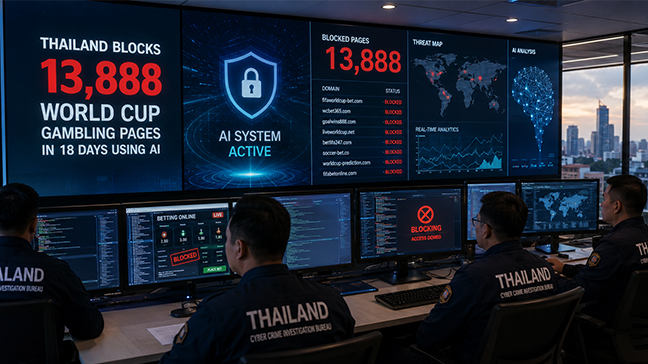
Thailand has blocked 13,888 illegal online gambling pages and URLs linked to the 2026 FIFA World Cup in just 18 days, using AI-supported monitoring as part of a wider digital enforcement campaign.
Thailand has intensified its crackdown on illegal online gambling during the 2026 FIFA World Cup, blocking 13,888 gambling-related pages, social media accounts and website URLs in an 18-day period.
The government said the action covered the period from June 1 to June 18 and was carried out by the Ministry of Digital Economy and Society through court orders and cooperation with online platforms. The campaign uses artificial intelligence to detect and analyse websites, social media pages and digital content linked to illegal gambling.
The measure follows instructions from Prime Minister Anutin Charnvirakul to strengthen proactive action against online gambling, especially during the World Cup period. Major football tournaments often trigger a sharp increase in illegal betting activity, with operators using social media, messaging platforms and short-form content to attract users.
The latest figure shows how quickly gambling-related content can spread around a major sports event. The 13,888 blocked pages and URLs were identified in less than three weeks, underlining the scale of the challenge facing regulators in a digital-first environment.
Thailand’s enforcement campaign did not begin with the World Cup. Earlier government data showed that from October 1, 2025 to May 31, 2026, authorities blocked 673,699 illegal gambling-related URLs. In May alone, 78,796 illegal gambling URLs were blocked, including cases handled through court orders and cooperation with platforms.
The World Cup has now accelerated that effort. Officials have warned influencers and social media users not to post links, promote gambling content or create material designed to attract users to illegal betting sites. The government has also warned the public not to engage with suspicious links or online offers connected to football betting, fake live streams or scams.
The campaign also includes a copyright warning. Businesses, restaurants and venues have been reminded not to show World Cup live broadcasts for commercial purposes without permission from authorised rights holders in Thailand. Unauthorised commercial use of match broadcasts may lead to imprisonment, fines or both.
For the gambling industry, Thailand’s approach shows a clear shift toward technology-driven enforcement. Instead of relying only on manual website blocking, authorities are using AI tools to identify digital content faster and coordinate blocking action with courts and platforms.
The case also highlights a wider trend in Asia. During the 2026 World Cup, regulators in several countries have increased action against illegal online betting, especially where operators use social media, influencers and payment channels to reach consumers.
For legal markets and licensed operators in other jurisdictions, Thailand’s campaign is a reminder that major tournaments can create both commercial opportunity and regulatory risk. Betting demand rises quickly during the World Cup, but so does enforcement scrutiny.
Thailand’s 18-day blocking campaign shows that illegal betting is no longer being treated as a limited website problem. It is now viewed as a broader digital ecosystem involving social media promotion, platform responsibility, AI monitoring, consumer protection and cybercrime prevention.
Share

-
 QTech firms up its content diversity wit...QTech, the leading game aggregator for ...October 14, 2026
 -
 SOFTSWISS Puts Business Growth on the Ag...SOFTSWISS, a global strategic technology...October 14, 2026
 -
 Evenbeter Examines the Poker Bot Challen...Evenbeter Product Manager Dmitry Titov e...October 14, 2026


