


Teen Cyber Gambling Reports Rise as 294 Cases Surface in South Korea
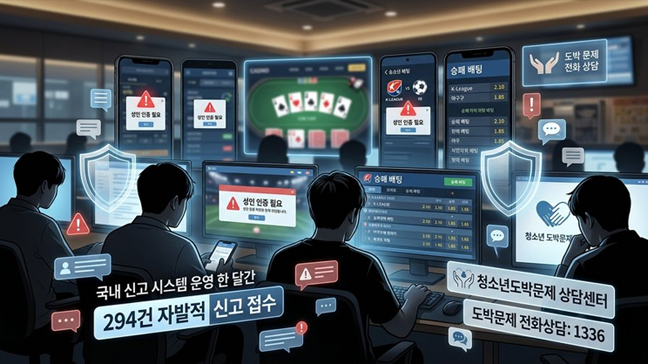
South Korea’s youth cyber gambling self-reporting system has received 294 reports in its first month, highlighting the rapid spread of online gambling among teenagers and the growing need for prevention, counselling and rehabilitation.
South Korea has recorded 294 youth cyber gambling reports in the first month of a nationwide voluntary reporting system, raising new concerns about the spread of online gambling among teenagers.
According to local reporting citing the National Police Agency, the cases included 244 reports filed by teenagers themselves and 50 reports submitted by guardians. The figures show that cyber gambling is no longer limited to isolated cases, but has reached schools and families across the country.
One of the most striking findings came from Gangwon Province, where 48 students from a single high school reportedly admitted to cyber gambling. Another nearby school recorded 20 additional reports, bringing the total in that local area to 78. The data suggests that teenage gambling can spread quickly through peer groups, online platforms and school networks.
The reported cases also show the depth of the problem. The average gambling period among self-reporting teenagers was 12 months, while the average amount deposited into gambling sites was about KRW3m. The highest individual amount reached KRW60m. Male teenagers accounted for 274 cases, or about 93% of the total. High school students made up 176 cases, while middle school students accounted for 118 cases, showing that cyber gambling has already reached younger age groups.
Authorities also identified cases where gambling debt led to secondary harm. Local reports described examples involving illegal borrowing, family conflict, theft and other behaviour linked to attempts to obtain gambling funds. These cases underline why youth gambling is being treated not only as a gaming issue, but also as a social, financial and mental-health concern.
The voluntary reporting system was launched by the government in May and will run until the end of August. It is open to minors under the age of 19 who have experience with cyber gambling, as well as their guardians. Reports are accepted through the 117 School Violence Reporting and Counseling Center.
Once a report is received, school police officers and professional gambling rehabilitation counsellors conduct counselling and screening. Depending on the level of risk, young people can then be connected to specialised addiction treatment and rehabilitation services. Authorities have also indicated that voluntary reporting, remorse and participation in treatment may be considered when deciding on police-level guidance measures.
The initiative involves several government bodies, including the Ministry of Education, the National Police Agency, the Ministry of Gender Equality and Family, the Gambling Industry Supervisory Commission, the Financial Services Commission and the Financial Supervisory Service. The aim is to connect prevention, reporting, counselling, rehabilitation and financial damage support into a single response system.
For South Korea, the new data confirms that youth cyber gambling is becoming a serious regulatory and social challenge. Smartphones, social media, illegal gambling sites and easy digital payments have made it easier for minors to access gambling products outside formal controls.
For the wider gambling industry, the case is another reminder that illegal online gambling creates risks far beyond adult betting markets. When minors are targeted or drawn into cyber gambling, regulators are likely to respond with stronger monitoring, platform controls, financial scrutiny and prevention campaigns.
South Korea’s self-reporting system is still in progress, but the first-month figures already show the scale of the problem. The key question now is whether early reporting, counselling and rehabilitation can prevent teenage gambling from turning into deeper addiction, debt and criminal exposure.
Share

-
 Ghana Tightens Gambling Licence Checks W...Ghana's Gaming Commission is strengtheni...October 20, 2026
 -
 India Cuts $5.56 Billion in Gaming Tax D...Indian tax authorities have reduced tax ...October 19, 2026
 -
 FURIA Win Thunderpick World Championship...Brazilian esports organisation FURIA cla...October 19, 2026


