


Spain Win World Cup Final as Argentina Make Unwanted History With Zero Shots in 90 Minutes
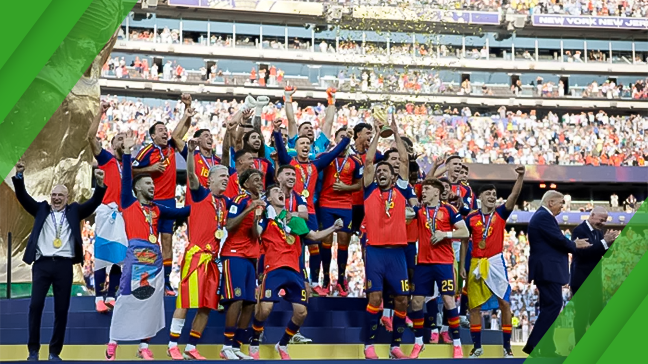
Spain defeated Argentina 1-0 after extra time to win the 2026 FIFA World Cup, completing one of the most dominant defensive campaigns in tournament history while Argentina produced one of the most striking attacking collapses ever seen in a final.
Spain have won the 2026 FIFA World Cup after beating Argentina 1-0 in a final defined not only by Ferran Torres’ extra-time winner, but also by a remarkable set of statistics that underlined the scale of Spain’s control.
The decisive goal came in the 106th minute, when Torres finished a move involving Nico Williams and Pedro Porro to break Argentina’s resistance and deliver Spain’s second world title, 16 years after the country’s first triumph in South Africa in 2010.
But the scoreline only tells part of the story. The final became extraordinary because of Argentina’s almost complete absence as an attacking force during normal time. According to post-match statistical reports, Argentina failed to register a single shot in the first 90 minutes of a World Cup final — a figure described as unprecedented in the competition’s final history.
The contrast was dramatic. Spain dominated the ball, territory and rhythm, pressing Argentina back for long periods and preventing Lionel Scaloni’s side from building any meaningful attacking sequence. By the time Spain finally scored in extra time, La Roja had reportedly produced 20 attempts, while Argentina still had none.
Argentina did eventually record late efforts in extra time, but by then the match had already been shaped by a defensive approach that left Lionel Messi, Julián Álvarez and Lautaro Martínez isolated. For a defending world champion, and for a team that had reached the final after dramatic knockout wins, the attacking numbers were a brutal reflection of Spain’s tactical superiority.
The result also denied Argentina a chance to become the first team since Brazil in 1962 to defend the World Cup title. Instead, the final may be remembered as the end of an era for Messi’s generation, which had reached three World Cup finals and won the 2022 tournament in Qatar.
For Spain, the victory confirmed one of the greatest defensive campaigns in World Cup history. Luis de la Fuente’s team conceded only one goal across eight matches, setting a new tournament benchmark. In a 96-year World Cup history filled with legendary defensive sides, no champion had completed a campaign with such a low number of goals conceded over this many matches.
Spain’s only goal conceded came earlier in the knockout rounds, but the team’s structure never collapsed. The centre-backs protected space with discipline, the midfield controlled transitions, and the full-backs limited wide attacks without sacrificing Spain’s ability to dominate possession.
This defensive record is especially notable because Spain were not a purely defensive team. They combined control, pressing, technical quality and positional balance. Their tournament was built on the ability to keep the ball, recover it quickly and deny opponents the chance to create shots before danger even developed.
The final therefore produced two opposite historical images. On one side, Spain became a champion built on control and near-perfect defensive efficiency. On the other, Argentina became associated with one of the most unusual attacking records ever reported in a World Cup final.
For football analysts, the match will likely become a reference point in discussions about elite tournament control. Spain did not simply win the final; they reduced the reigning champions to survival mode for most of the match. That is why the 1-0 scoreline feels narrower than the statistical story behind it.
Spain’s triumph closes the first 48-team World Cup with a powerful message: tournaments can still be decided by structure, discipline and collective balance. For Argentina, the defeat will raise difficult questions about tactics, risk and the cost of excessive caution on the biggest stage. For Spain, it is a second star — and perhaps the beginning of a new era of international dominance.
Share

-
 India Cuts $5.56 Billion in Gaming Tax D...Indian tax authorities have reduced tax ...October 19, 2026
 -
 FURIA Win Thunderpick World Championship...Brazilian esports organisation FURIA cla...October 19, 2026
 -
 Kenya Arbitrage Betting Report: October ...WorkBet data dated October 14, 2026 show...October 19, 2026


