


Namibia Supreme Court Upholds 10% Levy on Gambling Operators
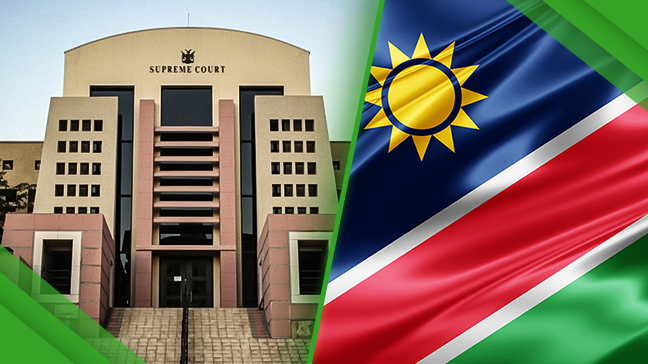
Namibia's Supreme Court has upheld a 10% levy on licensed gambling operators, confirming that the payments are due retroactively from December 2021. The ruling ends a long-running legal dispute over taxation and competition from illegal gambling businesses, while raising concerns about the authorities' failure to enforce existing regulations.
The Supreme Court of Namibia has ruled that licensed gambling house operators must pay a statutory levy of 10% on their net monthly gambling income, rejecting their argument that a previous settlement agreement with the government exempted them from the obligation.
The judgment, delivered on November 19, 2026, concerns an appeal brought by the Gambling House Association of Namibia (GHAN) and gambling operator Irmgard Fourty CC against the Ministry of Environment, Forestry and Tourism, the Gambling Board and other respondents.
The dispute originated from a settlement agreement concluded in June 2020, under which the responsible minister undertook not to impose levies on registered gambling houses until all illegal operators in the country had either been legalised or shut down. The agreement was subsequently made an order of the High Court.
However, Namibia's Gaming and Entertainment Control Act of 2018, which came into force on December 1, 2021, introduced a statutory levy on gambling operators. Under Section 62 of the legislation and Regulation 29, casino and gambling house licence holders are required to pay 10% of their net monthly gambling income, calculated after deducting winnings paid to players.
The operators argued that the 2020 settlement remained binding because illegal gambling establishments continued operating without paying equivalent taxes, licensing fees or regulatory levies. They maintained that this created unequal competitive conditions and imposed additional financial pressure on compliant businesses.
The Supreme Court rejected the central argument, ruling that an agreement with a government minister could not override a financial obligation established by Parliament. The judges confirmed that the statutory levy applies from December 1, 2021, regardless of whether illegal gambling operations have been eliminated.
However, the appeal succeeded on several limited points. The court removed the association itself from liability because it does not hold a gambling licence. It also overturned the High Court's order concerning interest and removed a direct payment instruction, leaving the calculation and collection of outstanding amounts to the established regulatory process. The judgment did not determine the total debt owed by individual operators.
The case also highlighted the scale of illegal gambling in Namibia. GHAN represents operators holding approximately 71 gambling house licences and operating around 579 gaming machines. According to evidence submitted by the association, illegal gambling machines outnumber licensed machines by approximately ten to one, although this figure reflects the operators' claims rather than an independently established national count.
While declining to issue the specific enforcement order requested by the appellants, the Supreme Court expressed serious concerns about the persistent failure to enforce gambling legislation against unlicensed operators. The court directed its registrar to forward the judgment to the Inspector-General of the Namibian Police Force.
The Gambling Board of Namibia welcomed the decision in a statement dated November 20, emphasising that the ruling confirms operators' statutory payment obligations dating back to December 2021.
The judgment provides greater legal certainty regarding the country's gambling levy while creating potential financial liabilities for licensed operators that have disputed payments over several years. At the same time, the court's criticism of ineffective enforcement places renewed attention on Namibia's illegal gambling market.
For the industry, the decision reinforces the principle that regulatory obligations remain enforceable even when authorities face difficulties combating unlicensed competition. The next important developments will involve the assessment and collection of outstanding levies and the government's response to concerns about illegal gambling operations.
Share

-
 Macau to Introduce Independent Audits of...Macau authorities are strengthening over...November 27, 2026
-
 Nomination Committee appointed for the A...Gaming Corps AB (publ) ("The Company" or...November 27, 2026
-
 Beyond the Licence: Why Local Expertise ...Obtaining a licence does not necessarily...November 27, 2026


