


Mexico State Seizes 2,700 Illegal Slot Machines in “Dos de Bastos” Operation
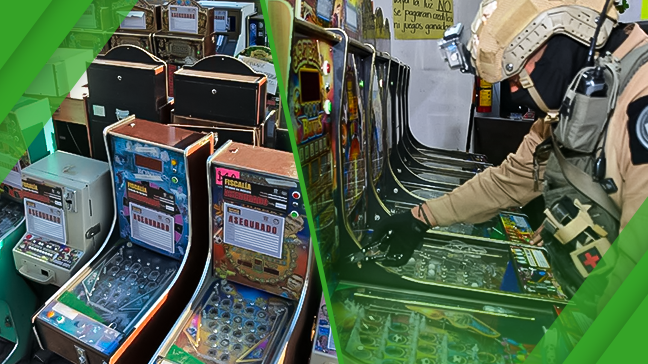
Authorities in the State of Mexico have seized 2,700 allegedly illegal slot machines, suspended 300 establishments and detained five people in a major enforcement operation targeting irregular gambling activity.
The Attorney General’s Office of the State of Mexico has carried out the “Dos de Bastos” operation, seizing around 2,700 slot machines that were allegedly operating irregularly across the state.
According to local media reports citing the Fiscalía General de Justicia del Estado de México, the operation also resulted in the suspension of 300 establishments and the detention of five people. The enforcement action was launched on July 13 and has been described as one of the most significant recent moves against illegal slot-machine activity in the region.
The seized machines were reportedly operating in commercial locations that authorities described as small informal casinos. Some of the equipment was found in shopping plazas and other public-facing businesses, raising concerns that gambling activity had become embedded in everyday retail environments.
Authorities also reported the seizure of around five million pesos in cash. The broader value of the irregular business, including machines, operating materials and cash, was estimated at about 50 million pesos.
The operation is important because slot machines are prohibited in Mexico under the federal gaming regulatory framework. The Reglamento de la Ley Federal de Juegos y Sorteos prohibits slot machines in any modality, defining them as devices through which a user plays with a wager, using cash or another form of payment, in order to obtain a prize.
Although federal authorities are responsible for the regulation of gambling machines, the State of Mexico prosecutor’s office said its intervention was linked to possible state-level offences. These may include concealment by reception, extortion, apology of crime, drug-related activity and transactions involving resources of illicit origin, according to local reports.
That distinction is important. The operation is not only a gaming-law matter. It is also being treated as a public-security and financial-crime issue, because investigators suspect that some establishments may have been connected to broader criminal activity.
Local outlets reported that the investigation followed several months of intelligence work and coordination between authorities. The scale of the seizures suggests that illegal slot-machine activity was not limited to isolated stores, but had developed into a wider commercial network.
The case also highlights the vulnerability of retail environments. Small gambling machines can be placed in convenience stores, shopping areas or other high-traffic locations, making them easy to access and difficult to monitor. This creates risks for consumers, minors and businesses that may be pressured into hosting or tolerating illegal devices.
For the regulated gaming industry, the operation sends a clear message: Mexico’s authorities are increasing pressure on informal gambling formats that operate outside authorised channels. Even when machines appear to function as low-stakes entertainment, their legal status and potential links to illicit cash flows can turn them into enforcement targets.
The detention of five people should be treated carefully at this stage. They are suspects or persons detained in connection with the operation, and any criminal responsibility must be determined through the legal process.
The next phase will be important. Authorities must determine who owned the machines, who managed the establishments, where the cash originated and whether the seized equipment was part of a broader criminal structure. If legal ownership and lawful origin cannot be proven, local reports indicate that authorities may pursue asset-forfeiture or destruction procedures.
“Dos de Bastos” therefore goes beyond a single seizure. It reflects a larger challenge for Mexico’s gambling oversight: illegal machines can spread quickly, generate cash, reach vulnerable users and create points of contact between informal gambling and organised crime.
For operators, landlords and retailers, the lesson is direct. Any gambling-related device placed in a business environment must be assessed under federal law and local enforcement risk. In Mexico, slot machines remain prohibited, and the State of Mexico operation shows that authorities are prepared to act when irregular activity becomes visible or linked to wider criminal investigations.
The broader outlook is that enforcement against illegal slot machines may continue, especially in areas where authorities suspect links to extortion, money laundering or recruitment of young people. The operation could become a reference point for similar actions in other Mexican states.
Share

-
 South Africa’s Content Market Is Crowded...South Africa’s gambling market continues...October 22, 2026
 -
 SOFTSWISS Group CSO Wins Top Global CISO...SOFTSWISS Group Chief Security Officer E...October 22, 2026
 -
 BF Games Puts Juicy Booster in the Spotl...BF Games has showcased Juicy Booster thr...October 22, 2026


