


Mbappé Effigy Burned in Paraguay as Racism Row Widens After World Cup Clash
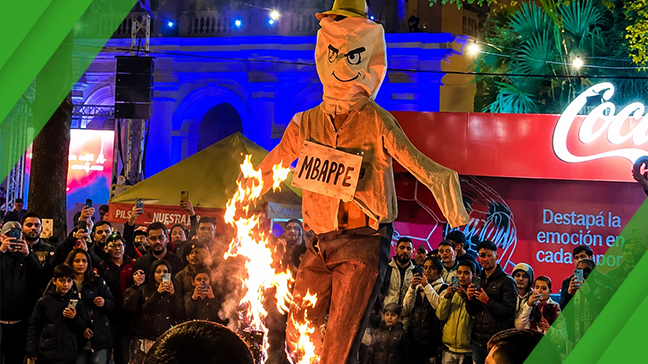
The fallout from France’s World Cup victory over Paraguay has moved beyond football, with a symbolic effigy of Kylian Mbappé burned in Asunción and international institutions condemning racist remarks made by Paraguayan senator Celeste Amarilla.
The controversy around Kylian Mbappé and Paraguay has continued to escalate after France’s 1-0 win in the Round of 16 at the 2026 FIFA World Cup. What started as a tense post-match episode involving Paraguay goalkeeper Orlando Gill has now turned into a wider political and diplomatic row.
The incident began after Gill attempted to greet Mbappé at the final whistle. According to media reports, the France captain did not respond to the handshake, after which the Paraguayan goalkeeper reacted emotionally and threw the ball toward him. Gill later said the moment came from frustration and praised France’s campaign.
Paraguayan senator Celeste Amarilla then criticized Mbappé in highly offensive terms, linking her comments to what she described as a lack of respect toward Gill and the Paraguayan team. Her remarks quickly drew international criticism because of their racist and xenophobic content.
Mbappé responded publicly, saying Amarilla did not represent Paraguay and accusing her of using racism to overshadow the historic effort of the Paraguayan national team. The French Football Federation also condemned the comments and said it had reported the case to prosecutors.
French prosecutors have since opened an investigation into possible aggravated public insult and incitement to hatred or violence. The case is significant because the alleged remarks were made outside France, but the victim is a French citizen, allowing French authorities to examine the matter under national law.
The Paraguayan government also distanced itself from Amarilla’s statements. In an official communiqué, it said the senator’s remarks were contrary to the values of peaceful coexistence, human dignity and respect, stressing that they did not represent either the government or the Paraguayan people.
The controversy deepened further in Asunción, where a symbolic effigy of Mbappé was burned during a San Juan celebration. Local media reported that the figure was used as part of the Judas Kái tradition, in which a doll representing a disliked public figure is set on fire during the festival. This year, the footballer became the focus following Paraguay’s elimination from the World Cup.
International reaction has also grown. The UN Human Rights Office condemned the racist and dehumanizing nature of the remarks and called on states, sports bodies and digital platforms to do more to prevent racism and discrimination in sport. The head of the World Health Organization, Tedros Adhanom Ghebreyesus, also criticized the comments and said Mbappé deserved an apology.
For France, the priority now is to keep attention on the tournament, with Mbappé preparing for the quarter-final against Morocco. But the scandal has already moved far beyond a single post-match gesture. It has become another reminder that major sports events can quickly expose deeper political, social and cultural tensions — and that racism in football is no longer treated as a purely sporting issue.
Share

-
 Global Esports Federation Chief Visits K...Global Esports Federation President and ...September 12, 2026
 -
 Nigerian Bookmakers and African iGaming ...The Association of Nigerian Bookmakers a...September 12, 2026
 -
 Brazilian Presidential Candidates Split ...Brazil's regulated betting market has be...September 11, 2026


