


Kenya’s Gambling Regulatory Authority backs JOOUST research as universities roll out harm-reduction policy for student betting
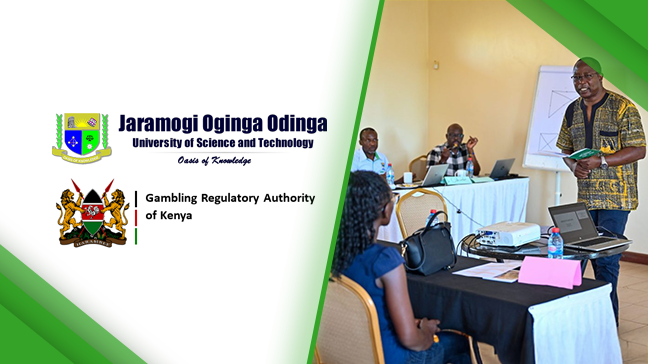
The regulator says JOOUST’s GEPU findings can inform policy decisions for higher-education institutions, with talks moving toward a formal pact and campus-level controls like counselling, firewalls and tighter fee-payment safeguards.
Kenya’s Gambling Regulatory Authority (GRA) has signalled support for Jaramogi Oginga Odinga University of Science and Technology (JOOUST) in efforts to reduce gambling-related harm among students and staff, following a stakeholder forum held at the university in mid-January.
According to local reporting, GRA Assistant Director Oluoch Oyucho attended the forum and praised results from the “Gambling Effects Among Vulnerable Groups in Public Universities in Kenya” (GEPU) project, saying the findings would help shape policy decisions to regulate gambling in institutions of higher learning. JOOUST has also indicated that the GEPU team is moving closer to a formal agreement with the regulator.
JOOUST’s planned “Gambling Harm Intervention Policy” focuses on harm reduction rather than an outright ban, reflecting the legal status of gambling in Kenya. Measures discussed include strengthened counselling and mentorship programmes, staff training for early identification of gambling problems, network-level firewalls to restrict access to betting sites on campus, and collaboration with HELB to reduce the risk of tuition funds being diverted into betting.
Focus Gaming News reports the GEPU project was funded through the Bristol Hub for Gambling Harms Research, and that JOOUST has secured an additional £6,000 to refine the policy with the aim of making it a model that can be shared with other institutions, including the University of Nairobi and partners in Nigeria, South Africa and the UK.
The timing is notable as Kenya transitions into a new regulatory framework: Kenya Law notes that the legacy Betting, Lotteries and Gaming Act was repealed in August 2025 by the Gambling Control Act (Act No. 14 of 2025). A legal analysis of the 2025 Act also describes the creation of the Gambling Regulatory Authority to replace the previous regime and places stronger emphasis on consumer protection and social-harm safeguards—an agenda that aligns with university-led interventions now being piloted.
If JOOUST’s approach scales, it could become one of Kenya’s first practical blueprints for tackling betting harm in higher education—linking campus policy, student-support services and regulator engagement into a single compliance-and-welfare pathway.
Share

-
 Brazil Blocks More Than 66,000 Illegal B...Brazil's Secretariat of Prizes and Betti...September 15, 2026
 -
 Mancala Gaming Launches Clover Vault: Pr...Mancala Gaming introduces Clover Vault: ...September 15, 2026
 -
 BF Games Heads to SBC Summit Lisbon 2026...BF Games will attend SBC Summit Lisbon 2...September 15, 2026


