


Indonesia’s PPATK Seeks Bigger 2027 Budget for Online Gambling Crackdown
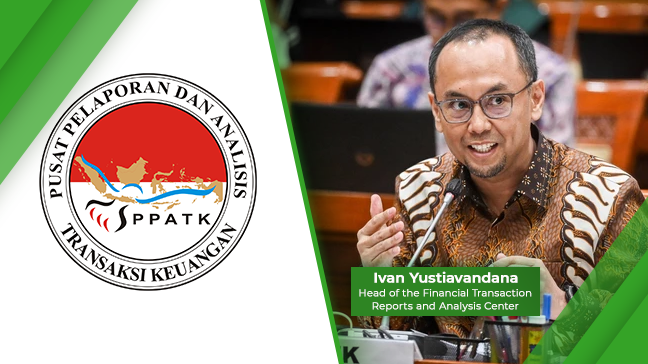
Indonesia’s financial intelligence agency has requested an additional Rp516.4bn for 2027 as it seeks to strengthen action against online gambling, money laundering and terrorism financing.
Indonesia’s Financial Transaction Reports and Analysis Centre, known as PPATK, is seeking a major budget increase for 2027 as the country continues its campaign against illegal online gambling and related financial crimes.
PPATK head Ivan Yustiavandana submitted the request during a working meeting with Commission III of the House of Representatives on June 17. The agency is asking for an additional Rp516.4bn in funding for the 2027 budget year.
According to Indonesian media reports, PPATK’s total budget requirement for 2027 is estimated at Rp769.8bn. However, the indicative ceiling set for the agency currently stands at Rp253.3bn, leaving a large funding gap that PPATK wants covered during the next stage of budget discussions.
The proposed increase would support several priority areas, including the prevention and eradication of money laundering, terrorism financing and online gambling. For PPATK, these areas are increasingly connected, as illegal gambling networks often rely on layered financial structures, nominee accounts, e-wallets, payment gateways and cross-border flows to move funds.
Online gambling has become one of Indonesia’s most urgent financial crime concerns. PPATK has previously warned that gambling transactions are no longer only a moral or social problem, but also a gateway into organised financial crime. Officials have pointed to the use of bank accounts, digital wallets, crypto assets and international payment channels to disguise and move gambling proceeds.
The scale of the issue is significant. PPATK data cited in previous government statements showed that online gambling transactions from 2017 to the third quarter of 2025 had reached Rp1,032tn, involving more than 259 million transactions. The figures underline why the agency is asking for stronger resources, better technology and greater operational capacity.
The budget request also comes as Indonesia continues to strengthen inter-agency cooperation against illegal gambling. PPATK has worked with law enforcement, the Financial Services Authority, communications authorities and other government institutions to identify suspicious transactions, block accounts and trace the financial networks behind gambling platforms.
For the gambling sector, the request shows that Indonesia’s enforcement strategy is becoming increasingly financial and intelligence-led. Instead of focusing only on blocking websites or arresting individual operators, authorities are following the money behind illegal platforms.
If approved, the larger 2027 budget could give PPATK more capacity to analyse suspicious transactions, support investigations, improve data systems and coordinate with domestic and international partners. This would make it harder for illegal online gambling networks to use Indonesia’s financial system to collect deposits, distribute winnings and launder proceeds.
For the wider Asian market, Indonesia’s move confirms a broader regulatory trend: governments are treating illegal online gambling as a financial crime issue, not only as a gambling violation. As digital betting operations become more mobile and cross-border, financial intelligence agencies are becoming central to enforcement.
Indonesia’s final budget decision will show how far the government is willing to go in backing PPATK’s role. But the request itself sends a clear message: online gambling remains a priority target, and the next phase of enforcement will depend heavily on financial monitoring, data analysis and stronger institutional capacity.
Share

-
 GameBeat Launches 3 Joker Crowns: Three ...GameBeat has released 3 Joker Crowns, a ...October 18, 2026
 -
 Premier League Matchweek 6: Manchester C...The Premier League returned after a thre...October 18, 2026
 -
 Botswana Prioritises Local Investors Ahe...Botswana’s Gambling Authority is prepari...October 17, 2026


