


Indian Online Gaming Firms Ask Supreme Court to Review 28% GST Ruling
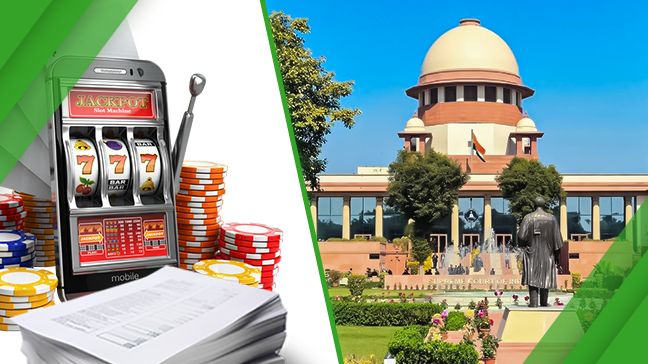
Three major online gaming companies have asked India’s Supreme Court to reconsider its May 27 judgment upholding 28% GST on the full face value of bets, a ruling that validated retrospective tax demands and intensified pressure on the country’s real-money gaming sector.
Three online gaming companies have approached India’s Supreme Court seeking a review of its landmark May 27 judgment on the 28% Goods and Services Tax applied to real-money online gaming.
Play Games24x7, Junglee Games and Sachiko Gaming, which operates PokerStars India, have filed review petitions challenging the ruling. The petitions follow a decision that upheld the constitutional validity of taxing online gaming at 28% on the full face value of bets rather than only on platform fees or gross gaming revenue.
The May 27 judgment was a major setback for India’s online gaming industry. The Supreme Court held that online gaming platforms cannot be treated merely as intermediaries and that activities involving money staked on uncertain outcomes fall within the GST framework for betting and gambling-related actionable claims.
The ruling also validated retrospective tax demands, exposing companies to legacy liabilities reportedly exceeding ₹1.5 trillion. For operators, this is the most serious part of the decision, because it affects past transactions and not only future business models.
The review petitions argue that the judgment raises important constitutional and legal questions. According to industry reports, the companies contend that the matter should have been considered by a larger Constitution Bench because the decision affects long-standing legal distinctions between games of skill and games of chance.
The companies are also challenging the court’s interpretation of “supply” under the Central GST Act. Their position is that online gaming platforms facilitate contests between users and should not be taxed as if they supply the entire actionable claim represented by player deposits.
The dispute goes to the core of India’s real-money gaming model. Before the tax change, many operators argued that GST should apply only to the platform commission or gross gaming revenue. The government’s position, now upheld by the court, is that GST can be levied on the full amount deposited or staked by users.
For the industry, the financial implications are significant. A 28% tax on full face value can sharply reduce margins, change pricing structures and make some real-money gaming formats commercially difficult. Retrospective demands increase the risk further, especially for companies that operated under a different tax interpretation before the 2023 amendments.
The case also creates uncertainty for investors. India remains one of the world’s largest digital gaming markets, with strong mobile adoption and a large base of real-money gaming users. However, the combination of high taxation, legal restrictions in some states and retrospective liabilities may affect future investment, consolidation and product strategy.
For regulators and tax authorities, the ruling strengthens enforcement power. It gives the government a clearer legal basis to pursue legacy GST claims and to treat online money games more like betting and gambling products for tax purposes, even where operators describe them as skill-based contests.
The next step will depend on whether the Supreme Court agrees to reconsider the judgment. Review petitions in India are usually limited in scope and are often heard in chambers, but a decision to revisit the case could reopen one of the most consequential legal battles for the online gaming sector.
The outcome will be closely watched across the industry. If the review fails, companies may need to absorb the new tax reality, restructure operations or focus on lower-risk gaming models. If the court agrees to reconsider the matter, it could give the sector another chance to challenge the full-face-value tax model and the retrospective demands that have shaken India’s gaming market.
Share

-
 Amigo Gaming Launches Black Flag Fortune...Amigo Gaming has released Black Flag For...October 16, 2026
 -
 Amusnet Expands South African Footprint ...Amusnet, a leading global provider of pr...October 16, 2026
 -
 BetOnGames takes the stage with Joker Mi...BetOnGames, part of BETCORE, has release...October 16, 2026


