


Ghana NLA Orders Private Lotto Operators to End Paper-Based Staking by August 1
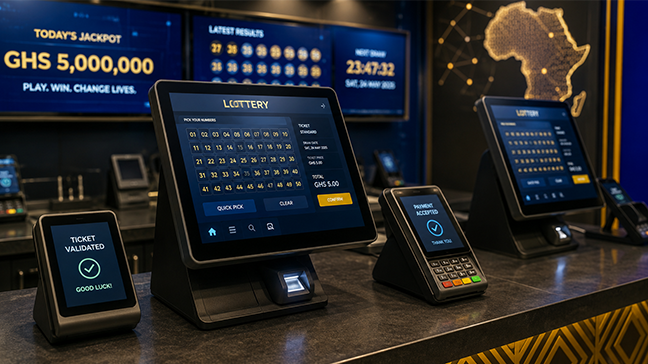
Ghana’s National Lottery Authority has ordered licensed Private Lotto Operators to migrate from manual lottery staking to electronic POS terminals by August 1, 2026, marking another step in the country’s lottery-sector digitisation drive.
Ghana’s National Lottery Authority has directed all licensed Private Lotto Operators to end manual, paper-based lottery staking and move to electronic Point of Sale terminals by August 1, 2026.
The directive forms part of the NLA’s broader digital transformation programme and follows a strategic partnership signed with Fidelity Bank PLC on July 21. The agreement is intended to support the rollout of modern POS terminals across lottery operations.
NLA Director-General Mohammed Abdul-Salam said the transition is required under the licensing agreements of Private Lotto Operators. The Authority has made clear that lottery staking should move away from “pen and paper” methods and into a fully electronic environment.
The shift is expected to standardise lottery operations nationwide, improve real-time transaction monitoring and reduce operational inefficiencies. It also gives the regulator stronger visibility over sales, payouts and operator compliance.
The new POS terminals are also designed to replace outdated systems and weak 2G-based infrastructure that had limited operational reliability. According to local reports, the modernised system should improve service delivery and make transactions more secure and traceable.
One of the most visible changes concerns prize payments. Under the new arrangement, the instant-win payout limit through POS terminals is expected to rise from GH¢1,200 to GH¢30,000, improving convenience for players and reducing delays in prize settlement.
The NLA has warned that operators, agents and writers who continue manual operations after the deadline will not be permitted to operate. Failure to transition could lead to licence revocation, while operators that have not settled regulatory fees by August 1 may also risk removal from the licensed-provider list.
The move follows other recent NLA reforms, including the registration of lotto agents and writers and the “No Sticker, No Sales” compliance campaign. Together, these measures show that Ghana is trying to tighten control over both retail distribution and private lotto operations.
For licensed operators, the message is clear: digital systems are no longer optional. PLOs will need to ensure that agents, writers and sales points are equipped with compliant terminals and that transactions are properly captured.
For the regulator, the reform could improve revenue assurance by reducing leakages associated with manual staking. It could also help identify illegal or non-compliant operators more quickly, since paper-based activity is harder to verify in real time.
The transition may create short-term pressure for smaller operators and field agents, especially where device deployment, training or network reliability remain challenges. However, the policy direction is consistent with a wider African trend toward digital lottery and betting supervision.
If implemented effectively, Ghana’s POS migration could make the lottery sector more transparent, more accountable and easier to monitor. The real test will come after August 1, when the NLA must show that the directive is not only a policy announcement, but an enforceable market standard.
Share

-
 Tunisia Proposes 60% Tax on Games and Co...Tunisia plans to increase the tax on cer...October 26, 2026
 -
 Premier League Matchweek 8: Man City Suf...The eighth round of the 2026/27 Premier ...October 26, 2026
 -
 Altenar Powers Wildz Group’s Entry into ...Leading sportsbook provider Altenar is p...October 26, 2026


