


FIFA Integrity Claims Challenged After World Cup Review
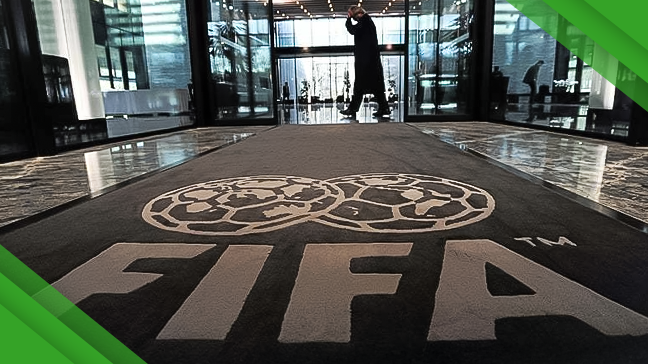
FIFA said it found no suspicious betting activity during the 2026 World Cup, but a separate Council of Europe-linked review has raised integrity questions around betting markets, prediction markets and controversial match incidents.
FIFA’s claim that the 2026 World Cup passed without suspicious betting activity has come under fresh scrutiny after a separate integrity review identified several risk signals during the tournament.
On July 21, the FIFA Integrity Task Force said it had monitored all 104 matches in real time and found no suspicious betting activity or indications of potential match manipulation. FIFA said betting-monitoring data and other relevant information had been centralised, analysed and shared among task-force members during the competition.
However, the Group of Copenhagen, an international network established under the Council of Europe’s Macolin Convention, published its own review a day later. It said its monitoring operation covered all 104 matches, placed 15 matches under enhanced monitoring and issued seven Yellow Notices.
The group also analysed 12 major controversies from an integrity-risk perspective and, for the first time at an international tournament, carried out continuous monitoring of prediction markets.
That difference does not prove wrongdoing. Yellow Notices are not match-fixing findings, and unusual betting patterns can have several explanations, including market hedging, odds movement, public rumours or liquidity shifts. Still, the review challenges the simplicity of FIFA’s clean-tournament message.
According to media reports citing The Athletic, the flagged areas included a betting market on whether Folarin Balogun would play for the United States after his red card, the red card shown to South Africa’s Themba Zwane, a lengthy VAR review in Spain’s match against Saudi Arabia and unusual prediction-market activity around Spain’s draw with Cape Verde.
The Balogun case is especially sensitive because it combined disciplinary controversy, prediction markets and questions over transparency. Reports said the Group of Copenhagen requested a written explanation from FIFA regarding the handling of that case.
The wider concern is not only whether any match was manipulated, but whether football’s current integrity systems are ready for a betting environment that now includes crypto-linked prediction markets, anonymous users and wagers on highly specific in-game or administrative outcomes.
For the gambling industry, this is a significant warning. Integrity monitoring can no longer focus only on traditional match-result betting. Player participation, cards, VAR decisions and disciplinary appeals can all become betting events, creating risks around inside information and market manipulation.
For FIFA, the issue is reputational. A clean internal integrity statement is useful, but it may not be enough if independent monitoring bodies identify risk signals that require explanation. The next step should be greater transparency around how alerts are assessed, dismissed or escalated.
The 2026 World Cup expanded to 48 teams and 104 matches, increasing the volume of betting activity and the number of possible integrity-risk points. That scale makes coordinated monitoring essential, but it also makes public confidence harder to maintain.
The central conclusion is cautious: no confirmed match-fixing has been established. But the Group of Copenhagen review shows that the tournament was not free from integrity questions. For the 2030 World Cup, FIFA and its partners will likely face pressure to build a stronger, more transparent framework for betting alerts, prediction markets and controversial match events.
Share

-
 Puerto Rico Proposes Online Casino Regul...Puerto Rico's government has introduced ...October 25, 2026
 -
 Evil Geniuses to Shut Down After More Th...One of the world's most recognised espor...October 25, 2026
 -
 REEVO Highlights Crazy Hunter: Zombie Ru...REEVO has added Crazy Hunter: Zombie Rus...October 25, 2026


