


Esports World Cup 2026 Moves to Paris With $75m Prize Pool and Global Club Ambitions
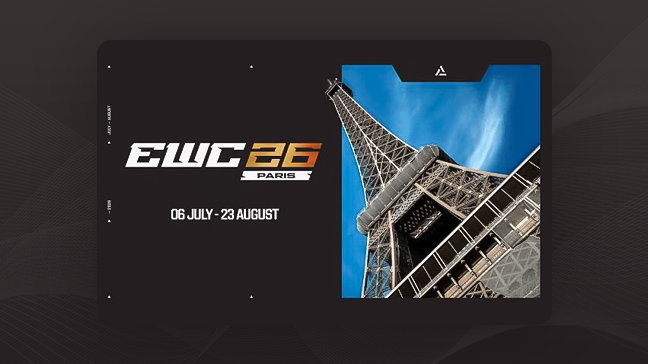
The Esports World Cup 2026 will take place in Paris from July 6 to August 23, bringing together more than 2,000 players, 200 clubs and 24 games in one of the most commercially important esports events of the year.
The Esports World Cup 2026 is set to become one of the defining esports business events of the year, combining a record-breaking prize pool, a multi-title club format and a major international relocation from Riyadh to Paris.
The tournament will run from July 6 to August 23 at Paris Expo Porte de Versailles. It will feature more than 2,000 players, around 200 clubs and competitors from more than 100 countries, with a total prize pool of more than $75m.
The move to Paris marks an important shift for the Esports World Cup. The event was originally announced as returning to Riyadh, where previous editions helped build the tournament into one of the biggest products in global competitive gaming. However, organisers later confirmed that the 2026 edition would be hosted in France, making Paris the first international host city outside Saudi Arabia.
For the Esports Foundation, the relocation does not mean a smaller tournament. Instead, it shows an attempt to turn the Esports World Cup into a global rotating platform, similar to major international sports events. Paris brings a strong event infrastructure, a major gaming audience and a symbolic connection to global sport after hosting the 2024 Olympic and Paralympic Games.
The most important commercial element remains the Club Championship. Unlike traditional esports tournaments focused on a single game, the Esports World Cup rewards organisations that can perform across multiple titles. In 2026, the Club Championship will distribute $30m to the top 24 clubs, with the winning club set to receive $7m.
This format changes the economics of esports. Clubs are encouraged to build multi-title rosters, invest in different genres and think like global sports organisations rather than single-game teams. The result is a more diversified competitive model, where long-term structure, talent development and cross-title performance become central business assets.
The game lineup also shows the scale of the project. The 2026 edition includes major titles across FPS, MOBA, battle royale, fighting games, sports simulation, strategy, racing and even chess. Titles include Counter-Strike 2, Dota 2, League of Legends, VALORANT, Fortnite, PUBG, Mobile Legends: Bang Bang, Honor of Kings, Street Fighter 6, TEKKEN 8, Rocket League, EA Sports FC 26 and others.
The event is also becoming a media product. The 2025 edition reached hundreds of millions of viewers worldwide and generated hundreds of millions of hours watched. For 2026, organisers are expanding co-streaming and creator engagement, making independent streamers part of the tournament’s distribution strategy.
For the gambling and betting industry, the Esports World Cup is important for several reasons. First, it brings multiple high-liquidity esports titles into one concentrated calendar. Second, it creates strong narratives around clubs, players and national fan bases. Third, it increases demand for data, odds modelling, integrity monitoring and responsible betting controls.
The multi-title format can also make esports betting more complex. Operators and data providers must track different games, rule sets, competitive formats and player pools over seven weeks. This creates opportunities for deeper markets, but also raises the importance of reliable data, match integrity and risk management.
Paris 2026 may therefore become more than a tournament. It is a test of whether esports can operate at the scale of global sports events, with live audiences, international broadcasting, club economics, creator-led distribution and betting-market relevance all working together.
For the wider industry, the message is clear: the Esports World Cup is not only about prize money. It is about building a global esports business model where clubs, publishers, sponsors, media platforms and betting operators all have a role in the same ecosystem.
Share

-
 Nolimit City discovers the true meaning ...October 20, 2026
 -
 Built for Speed: 3 New Sportsbook Featur...GR8_TECH has recently introduced the fas...October 20, 2026
 -
 Taiwan Blocks Kalshi and Coinbase Amid E...Taiwanese authorities have restricted ac...October 20, 2026


