


Esports Nations Cup 2026 Puts National-Team Gaming in the Spotlight After IOC-Saudi Split
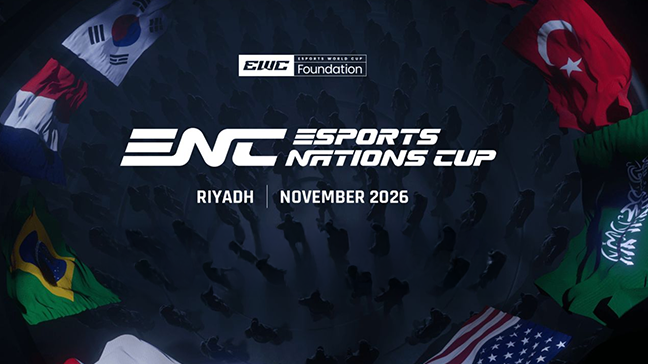
As the Olympic Esports Games remain without a clear new model, the Esports Nations Cup 2026 is moving forward as a large-scale national-team competition in Riyadh, positioning itself as one of the most important tests for the future of international esports.
The Esports Nations Cup 2026 is becoming one of the most important esports stories of the year, not only because of its scale, but because of what it represents for the future of competitive gaming.
The tournament is scheduled to debut in Riyadh from November 2 to 29, 2026, bringing a new nation-based format to the global esports calendar. Unlike club-focused competitions, the ENC is built around national representation, giving players the opportunity to compete for their countries and territories across multiple leading titles.
The event arrives at a strategically important moment. In October 2025, the International Olympic Committee and Saudi Arabia ended their cooperation on the Olympic Esports Games. The IOC has said it will develop a new approach to the project, but the Olympic esports concept still lacks a fixed public structure, confirmed host and clear competitive model.
Against that background, the Esports Nations Cup is moving faster. The Esports Foundation has confirmed a 16-game lineup, a large global qualification system and a funding model designed to support both players and coaches. More than 100,000 participants are expected to compete through qualification events across 100 markets, creating one of the broadest national pathways ever attempted in esports.
The list of games also shows the ambition of the project. ENC 2026 includes titles such as Counter-Strike 2, Dota 2, League of Legends, VALORANT, PUBG, PUBG MOBILE, Mobile Legends: Bang Bang, Honor of Kings, Rocket League, Street Fighter 6, EA SPORTS FC, Apex Legends, Rainbow Six Siege, Trackmania, Fatal Fury and Chess.
This gives the event a very different identity from traditional esports circuits. Publisher-led leagues usually focus on specific games. Club-based tournaments reward organisations with strong multi-title structures. The Esports Nations Cup, however, introduces a third model: country-based esports, where national pride, regional qualification and international rivalry become the central product.
The League of Legends announcement shows how this model can work in practice. More than 100 national and territorial rosters were submitted, while 32 teams will compete in the finals. Direct invitations were based on official ENC rankings, with major esports countries such as China, South Korea, France, Vietnam, Brazil and the United States positioned as key contenders.
For fans, the national-team format is easy to understand. It creates rivalries that resemble traditional sport, even in games that normally follow club or franchise structures. For sponsors and broadcasters, it may also create a more accessible product because national identity can help attract casual viewers who do not follow the full esports calendar.
The timing also matters for Saudi Arabia’s wider esports strategy. Even after the end of its IOC partnership, Saudi-backed esports projects have continued to expand. The Esports World Cup focuses on clubs and prize-pool scale, while the Esports Nations Cup focuses on countries and national representation. Together, these events suggest that Saudi Arabia is building a parallel global esports ecosystem outside the Olympic framework.
For the gambling and betting industry, the ENC could become highly relevant. National-team esports may create new betting narratives, especially around regional strength, international rivalries and qualification pathways. However, the format also increases the need for strong integrity systems, reliable data feeds and clear rules across multiple titles.
The biggest question is whether the ENC can become the national-team standard for esports before the IOC finalises its own Olympic esports model. If the event succeeds, it may shape how fans, publishers, operators and sponsors think about international esports competition.
The Olympic brand still carries global prestige, but the ENC currently has something more concrete: dates, games, qualification structures, rosters and a host city. That makes it the more immediate story for the esports business.
The future of esports may not be decided by one institution. Instead, it may be shaped by competing models: Olympic esports, publisher-led leagues, club-based mega-events and national-team tournaments. The Esports Nations Cup 2026 is now positioned at the centre of that debate.
Share

-
 Altenar Highlights Ice Hockey Early Payo...Altenar is highlighting its Early Payout...October 21, 2026
 -
 Slotegrator opens registration for free ...Slotegrator, a leading iGaming software ...October 21, 2026
 -
 QTech adds ELA Games to Global PlatformQTech, the leading game aggregator for e...October 21, 2026


