


Cambodia Prepares Nationwide Casino Inspections as CGMC Tightens Oversight
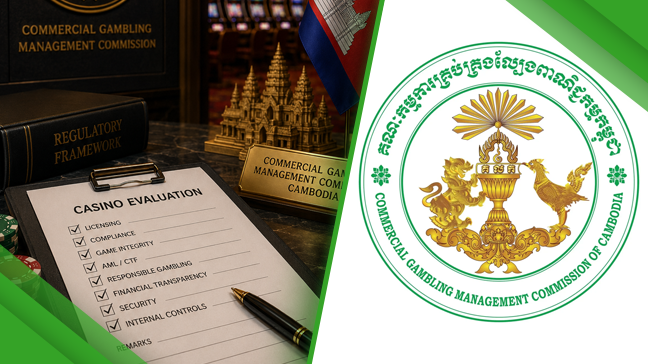
Cambodia’s Commercial Gambling Management Commission is preparing nationwide casino evaluations, signalling a more structured phase of supervision for the country’s commercial gambling sector.
Cambodia’s gaming regulator is preparing nationwide casino inspections and evaluations as it steps up oversight of the country’s commercial gambling sector.
The Commercial Gambling Management Commission of Cambodia has reviewed preparations for the inspections, alongside its regulatory priorities for the second half of 2026. The meeting was chaired by CGMC Secretary General Yeth Vinel and also covered preparations for the regulator’s 2027–2030 strategic plan and vision.
The move suggests that Cambodia is shifting from broad licensing supervision toward a more operational form of casino oversight. Rather than focusing only on whether casinos are authorised to operate, the regulator appears to be preparing a framework to assess how they operate, whether they follow regulatory standards and whether internal controls are strong enough.
Earlier this month, CGMC officials also reviewed a final draft of a casino quality inspection and assessment project. That work included discussions on inspection standards, casino governance, licensed gaming staff and internal regulatory structures. Taken together, these steps point to a wider effort to professionalise supervision of licensed casinos.
For Cambodia, this is an important development. The country’s casino sector has long been connected to border tourism, foreign investment and integrated entertainment projects, but it has also faced scrutiny over illegal gambling, online fraud, weak compliance and the use of casino-linked venues for activities beyond traditional gambling.
Nationwide inspections could help the regulator identify whether casinos are meeting operational, licensing and compliance requirements. Evaluation teams may focus on licence status, management controls, employee authorisations, financial reporting, customer safeguards and whether venues are connected to unauthorised activity.
The initiative also reflects Cambodia’s need to strengthen confidence in the legal casino market. A regulated sector can only remain credible if licensed venues are visibly monitored and if non-compliant operators face consequences. Without regular inspections, licensing can become a static administrative process rather than an active system of supervision.
For operators, the message is clear: holding a licence will not be enough. Casinos will need to demonstrate that they can meet ongoing standards, maintain proper records, manage employees correctly and cooperate with inspection teams. Those with weak documentation or unclear operational practices may face greater scrutiny.
The evaluations could also influence future policy. If the regulator identifies recurring problems across the market, Cambodia may use the results to update licensing conditions, strengthen employee licensing rules, improve inspection procedures or introduce new compliance requirements.
The reference to a 2027–2030 strategic plan is particularly important. It suggests that the inspections are not only a short-term enforcement measure, but part of a longer regulatory roadmap. Cambodia appears to be building a more structured model for casino governance, with clearer priorities and more formal assessment tools.
The wider regional context also matters. Across Asia, gambling regulators are under pressure to address money laundering, illegal online gambling, cyber-fraud networks and cross-border criminal activity. Cambodia’s casino market has been especially sensitive because some commercial gambling locations have been linked in media and enforcement reports to broader illicit activity.
A stronger inspection regime could help separate legitimate casino operators from venues that fail to meet regulatory expectations. It may also support cooperation with financial intelligence units, police, immigration authorities and local administrations where gambling venues intersect with security or crime concerns.
For the gambling industry, Cambodia remains a market with commercial potential, but the compliance burden is increasing. Operators, suppliers and investors should expect more questions about transparency, governance, staffing, financial controls and the real economic activity behind licensed venues.
The challenge for CGMC will be execution. Nationwide inspections require trained staff, consistent criteria, accurate records and the ability to enforce findings. If evaluations are applied unevenly or without clear follow-up, the impact will be limited. If they are consistent and transparent, they could become a foundation for a more credible gambling market.
Cambodia’s next phase of casino regulation will therefore be judged not only by the number of inspections carried out, but by what happens after them. The key test will be whether evaluations lead to stronger compliance, licence discipline and clearer separation between authorised commercial gambling and illegal activity.
For now, the direction is clear: Cambodia is preparing to move casino oversight from policy discussion into nationwide field evaluation. That marks a significant step in the country’s effort to tighten control over commercial gambling.
Share

-
 Altenar Highlights Ice Hockey Early Payo...Altenar is highlighting its Early Payout...October 21, 2026
 -
 Slotegrator opens registration for free ...Slotegrator, a leading iGaming software ...October 21, 2026
 -
 QTech adds ELA Games to Global PlatformQTech, the leading game aggregator for e...October 21, 2026


