


Brazil’s regulated betting market braces for STF conciliation fight over Bolsa Família-linked betting restrictions
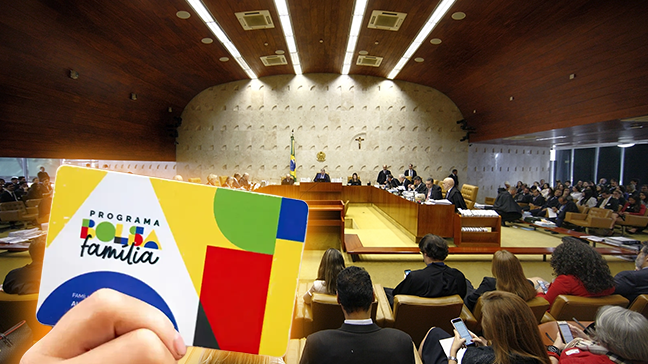
Operators and retail groups are finalising legal arguments ahead of a Supreme Federal Court conciliation session that will define how far the government can go in blocking welfare-linked betting activity—while keeping the core principle that social-assistance funds should not be used for gambling.
Brazil’s regulated fixed-odds betting market is entering a decisive phase as operators and retail representatives prepare their legal strategies for an upcoming conciliation session at the Supreme Federal Court (STF). The dispute is being treated as a precedent-setting test for how Brazil will enforce restrictions linked to Bolsa Família and other social assistance programmes on betting platforms.
At the centre of the case is the question of how to prevent welfare money from being used for bets—and whether the federal government’s operational approach to blocking should extend beyond new registrations to include closing or restricting existing accounts. Justice Luiz Fux, who is handling the matter at the STF, has previously signalled that the court is looking for a “middle ground” between social protection and operational feasibility.
The STF had formally called a conciliation hearing for 17 March 2026 (15:00) and summoned the federal government/Union, the Ministry of Finance, the Attorney General’s Office (PGR), CNC (as the claimant) and ABLE (which sought additional interim measures).
However, the conciliation process has been unstable: a later session set for 10 February 2026 was cancelled by Justice Fux, and Brazilian business and sector press now report that—as of mid-March—there was still no new date confirmed for the conciliation meeting, even as both sides lock in their arguments.
On the merits, betting operators are expected to argue that Bolsa Família is not necessarily the only income source for beneficiaries and that the average amount wagered by this group is relatively small—while also claiming that broad blocking measures and forced closures of active accounts would be disproportionate. Retail and industry bodies backing tougher controls counter that betting growth has a direct impact on low-income household budgets and can increase indebtedness, pushing for stricter limits and clearer enforceable rules.
Until the STF defines a final operational model, the market remains in a “live compliance” zone shaped by interim decisions—one reason this conciliation is so consequential. A ruling that tightens enforcement could force operators to redesign controls and monitoring, while an overly permissive outcome risks intensifying political pressure for new restrictions in Congress and among consumer-protection advocates.
Share

-
 Altenar Highlights Ice Hockey Early Payo...Altenar is highlighting its Early Payout...October 21, 2026
 -
 Slotegrator opens registration for free ...Slotegrator, a leading iGaming software ...October 21, 2026
 -
 QTech adds ELA Games to Global PlatformQTech, the leading game aggregator for e...October 21, 2026


