


Brazilian Olympic Committee moves to diversify funding and cut reliance on lottery and betting-linked income
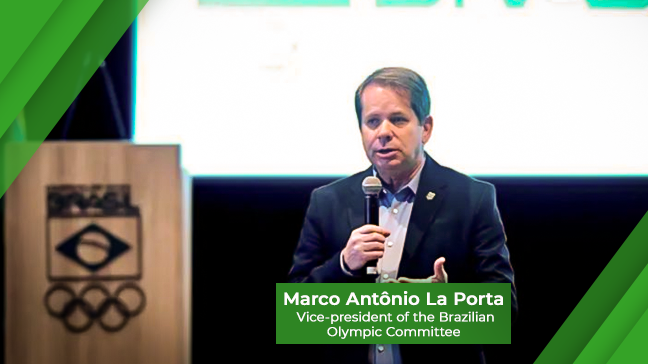
COB president Marco Antônio La Porta says the organisation is pursuing more private-sector backing after 2025 brought its strongest revenue result in five years—while highlighting the long-term risk of depending too heavily on lottery transfers.
The Brazilian Olympic Committee (COB) has outlined a strategy to reduce its dependence on lottery transfers and other betting-adjacent revenue streams, as it looks to make its finances more resilient ahead of the Los Angeles 2028 cycle. The push was detailed by president Marco Antônio La Porta in comments reported in Brazil this week.
In 2025, COB’s budget/revenue base reached R$ 594 million, with reporting indicating around 75% of that amount came from lottery-related transfers—a concentration La Porta’s team views as a structural vulnerability.
Those lottery flows are anchored in Brazil’s funding model for Olympic sport. COB notes that Law 13.756/18 allocates it roughly 1.7% of the gross proceeds from federal lottery products, which the committee then channels into Olympic sport programmes and confederation support.
The concern is not theoretical: Poder360 recalls that in 2019 COB faced a critical moment when lottery transfers were temporarily suspended, and it also points out years where lottery money represented more than 90% of COB revenue—illustrating how quickly a disruption can threaten operational stability.
La Porta’s diversification plan is centred on increasing private fundraising and rebuilding sponsors, including recovering partners that drifted away after Rio 2016. COB has also highlighted major sponsorship support from CAIXA/Loterias CAIXA (described as the largest sponsorship in its history), underscoring that commercial income is already a key lever alongside statutory lottery funding.
COB has additionally stepped up its presence in Brasília via a new national council of sports committees and is engaging lawmakers on priority agendas—including sports betting regulation and tax relief for importing sports equipment. The overall message is that Brazilian Olympic sport wants a funding mix that is less exposed to policy shocks—while still recognising that lottery and betting-linked money remains a major pillar today.
Share

-
 SOFTSWISS Survey 2026 Exposes a Gap in S...A new survey of 1,000 South African adul...September 17, 2026
 -
 GRAF 2026 Puts AI, Real-Time Monitoring ...Gaming regulators from across Africa hav...September 17, 2026
 -
 Blackjack Live Leads Amusnet’s Showcase ...From September 29 to October 1, Amusnet ...September 17, 2026


