


Brazil tightens crackdown on prediction markets as unregulated betting sites are blocked
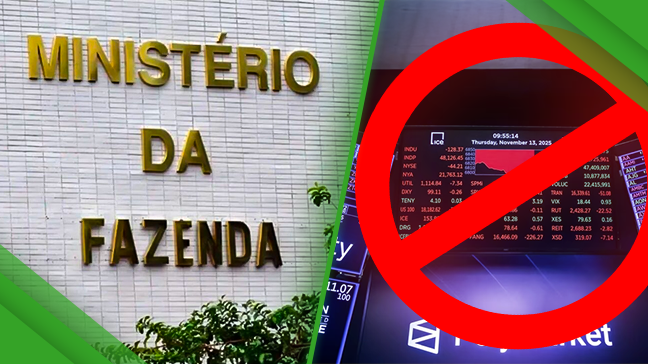
Brazil has moved against prediction-market operators that authorities say function like unlicensed betting businesses, escalating its enforcement campaign against digital gambling products outside the federal regulatory system.
Brazil’s government announced on April 24 that websites operating in the so-called “prediction market” were being blocked, after the Ministry of Finance concluded that these platforms work under the same basic logic as fixed-odds betting. In the government’s description, these services allow users to trade predictions on real-world outcomes such as political decisions, economic indicators, sports events and cultural awards, and therefore should face the same regulatory scrutiny as betting operators.
The legal position has hardened on two fronts. First, the Finance Ministry said the basis for its interpretation is a technical note from the Secretariat of Prizes and Betting backed by the Attorney General of the National Treasury, which recognised the ministry’s power to regulate and supervise this type of activity. Second, the government said the understanding is reinforced by National Monetary Council Resolution No. 5,298 of April 24, 2026, which prohibits the offering and trading in Brazil of derivatives contracts linked to sports, political and entertainment events.
Operationally, Brasília said the Finance Ministry sent Anatel a list of 28 companies offering these irregular products and that access to the platforms had already been blocked. The move forms part of a much broader anti-illegal-betting campaign: according to the same official update, Brazil has already blocked more than 39,000 irregular sites, removed 203 apps operating outside federal regulation, issued 1,665 notifications through financial and payment-sector coordination, and shut 697 accounts tied to suspicious illegal-betting activity.
The government is clearly trying to stop prediction markets from becoming a parallel, weakly supervised betting channel. Officials argue that these products can expose consumers to the same risks already associated with illegal gambling, including over-indebtedness, lack of transparency and exposure of children and teenagers to gambling-like mechanics. In practice, the latest action shows that Brazil’s next regulatory phase is not only about licensing traditional operators, but also about preventing adjacent digital products from slipping around the betting rules already in force.
Share

-
 Botswana Prioritises Local Investors Ahe...Botswana’s Gambling Authority is prepari...October 17, 2026
 -
 Amigo Gaming Launches Black Flag Fortune...Amigo Gaming has released Black Flag For...October 16, 2026
 -
 Amusnet Expands South African Footprint ...Amusnet, a leading global provider of pr...October 16, 2026


