


Brazil SPA reports more than 60,000 illegal betting sites blocked as enforcement expands
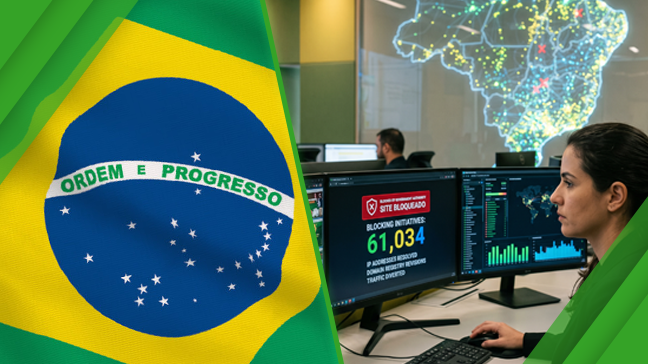
Brazil’s Secretariat of Prizes and Betting has reported more than 60,000 blocked illegal betting websites and is preparing new measures targeting financial flows, frozen funds and consumer reimbursement.
Brazil’s Secretariat of Prizes and Betting (SPA/MF) presented an update on its enforcement against illegal betting operators during an August 11 hearing of the Chamber of Deputies’ External Committee on Piracy Acts.
Carlos Renato Resende, Undersecretary for Monitoring and Inspection at the SPA, said more than 60,000 illegal betting websites have been blocked. The process, initially handled manually from January 2025, was automated in October, allowing authorities to act against domains on a much larger scale.
The SPA is now increasing its focus on the financial infrastructure supporting unauthorised operators. The Ministry of Finance is working with the National Financial System on additional rules expected by early September, including measures aimed at restricting payment flows connected with illegal betting.
Authorities are also developing a mechanism to freeze funds belonging to illegal companies. Consumers who can prove that blocked money includes funds lost through fraud could request reimbursement. If an operator cannot demonstrate the lawful origin of remaining funds, they could ultimately be forfeited to the state and directed to the National Public Security Fund.
The strategy reflects growing recognition that domain blocking alone is insufficient because illegal operators can quickly create replacement websites and use alternative payment channels. Brazil’s Federal Court of Accounts has similarly called for stronger coordination between the SPA, Anatel, the Central Bank, financial-intelligence authorities, tax officials and law-enforcement bodies.
Despite enforcement efforts, the illegal market remains substantial. Research by Instituto Locomotiva presented at the hearing estimated that unauthorised operators account for between 38% and 41% of Brazil’s betting market, although this is below an earlier estimate of 41% to 51%.
Licensed operators, by contrast, must comply with requirements covering traceable payments, player identification, age restrictions, taxation and anti-money-laundering controls. Authorities have also tightened rules on advertising and promotion of unauthorised betting services.
The August 11 hearing shows that Brazil is moving from a strategy centred mainly on website blocking toward a broader model combining technical restrictions, financial disruption and inter-agency enforcement. The new financial measures expected in September could become the next important stage in efforts to reduce the illegal betting market.
Share

-
 iGaming Club Hosts Its Third Webinar on ...iGaming Club by AffPapa has held its thi...September 29, 2026
 -
 Botswana Backs Nigeria’s Push for Pan-Af...Botswana has endorsed a Nigerian proposa...September 29, 2026
 -
 Manchester United Post Seventh Straight ...Manchester United generated a club-recor...September 29, 2026


