


Brazil Becomes First Latin American Country to Sign Macolin Convention Against Match-Fixing
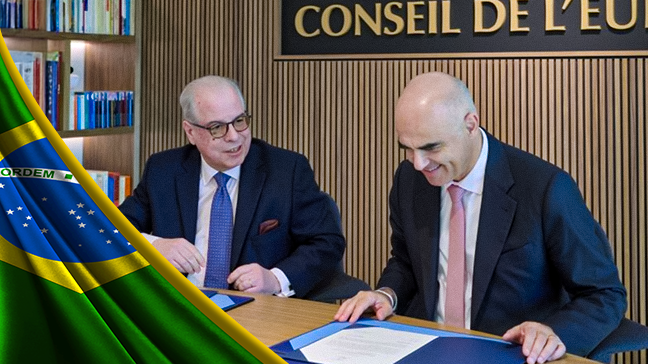
Brazil has become the first Latin American country to sign the Council of Europe's Macolin Convention, strengthening its commitment to international cooperation against match-fixing and manipulation of sporting competitions.
Brazil has taken a significant step towards strengthening sports integrity by signing the Council of Europe's Convention on the Manipulation of Sports Competitions, commonly known as the Macolin Convention, on October 30, 2026.
The signing ceremony took place at the Council of Europe's headquarters in Strasbourg, France. Brazil was represented by Ambassador Ricardo Neiva Tavares, in the presence of Council of Europe Secretary General Alain Berset.
Brazil becomes the 44th signatory to the convention and the first country in Latin America to join the initiative. At the time of the signing, 17 countries had ratified the treaty.
The Macolin Convention is the only legally binding international treaty specifically dedicated to combating sports competition manipulation. It establishes a framework for cooperation between public authorities, sports organisations, betting regulators and other relevant stakeholders.
Its provisions encourage information-sharing, identification of suspicious betting activity, prevention measures and coordinated responses to potential match-fixing. The framework also supports international cooperation in investigating manipulation that crosses national borders.
Brazil's participation is particularly relevant given the country's large sports betting market and the importance of football within its sporting economy.
However, signing the convention does not automatically make Brazil a party to its binding obligations. Ratification and the applicable domestic procedures are still required before the treaty enters into force for the country.
The move could create new opportunities for cooperation between Brazilian authorities and international integrity organisations. Its practical impact will depend on ratification and the development of effective mechanisms for detecting and investigating suspicious sporting activity.
Share

-
 BGaming Unveils November 2026 Games Line...BGaming has revealed its November 2026 r...November 3, 2026
-
 NEXT.io’s Pierre Lindh Joins Bet It Driv...Bet It Drives Season 5 continues in Lisb...November 3, 2026
-
 Africa Arbitrage Betting: Top 5 Bookmake...Explore the top five arbitrage bookmaker...November 2, 2026


