


Slots vs Table Games: What Players Prefer and Why
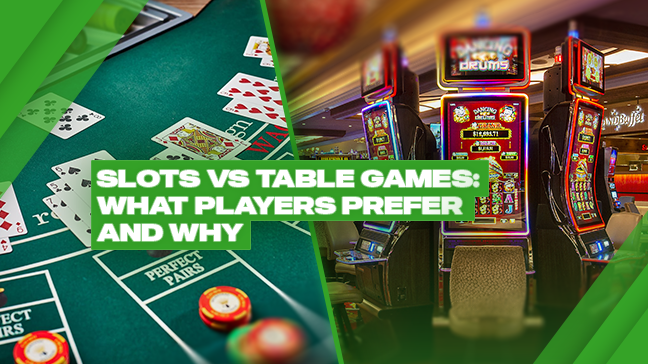
Walk into any casino — online or land-based — and you'll notice the split almost immediately. One crowd is glued to spinning reels, lights flashing, no real thinking required. Another crowd sits around felt tables, watching cards, making decisions, calculating odds. Two very different experiences. And yet both are wildly popular.
So what actually drives players toward one over the other? The answer isn't as simple as "slots are for beginners and tables are for pros." There's a lot more going on, and it shifts depending on the player, the platform, and honestly, the mood.
Why Slots Still Dominate
Slots are the most played casino game category worldwide, and that's not changing anytime soon. According to Statista, online slots consistently account for the largest share of online gambling revenue globally, outpacing all table game categories combined.
The reasons aren't hard to figure out. Slots ask almost nothing from the player. You pick a stake, press spin, and wait. There's no strategy to learn, no other players to worry about, no pressure. For someone who wants to relax and chase a jackpot without studying a rulebook, that's a strong appeal.
There's also the sheer variety. Modern online slots come with hundreds of themes, bonus features, free spin rounds, and progressive jackpots that can hit seven figures. Developers like NetEnt, Pragmatic Play, and Hacksaw Gaming release new titles almost every week. Players don't get bored easily when there's always something fresh to try.
Media coverage has helped too. Publications like The Star have highlighted the growing market for online slots, particularly in Canada, where more players are looking for regulated, real-money platforms to play on. That kind of mainstream visibility has pulled in a wider audience — people who might never have walked into a casino but are comfortable playing on their phone during a commute.
The accessibility factor is huge. Minimum bets on slots can be as low as a few cents per spin, which means players can stretch a small budget over a long session. That's not always possible at a blackjack or baccarat table, where the minimum is often $5 to $25 just to sit down.
What Table Game Players Get That Slots Don't Offer
Table game fans tend to be a different kind of player. They're looking for more than just a dopamine hit from spinning reels. They want to feel like their decisions matter — and at the right table, they actually do.
Take blackjack. When played with basic strategy, the house edge drops to around 0.5%, which is genuinely competitive. Games involving skill and decision-making tend to attract players who value a sense of control over outcomes — a psychological element that pure luck-based games simply can't replicate.
Poker takes this further. Whether it's video poker or live poker rooms, the game rewards study and patience. Players who put in time learning hand rankings, pot odds, and opponent tendencies can improve their results over time. That's not possible with slots. No amount of studying a slot machine changes the RTP or the outcome of a spin.
Roulette sits somewhere in the middle. It's easy to pick up, but players can choose between simple bets (red or black) and more complex ones (corners, splits, specific number clusters). It offers the illusion of strategy even where the math remains largely the same.
And there's the social side. Table games are inherently more interactive. Sitting at a craps table with six other players riding the same roll creates a shared energy you won't find at a slot machine. Online live dealer games have worked hard to replicate this, with real croupiers streamed from studios, live chat, and in some cases, the ability to see other players at the table.
How the Platform Changes Everything
The rise of online and mobile gambling has genuinely shifted the preference landscape. In a land-based casino, the layout nudges players toward slots — they take up most of the floor, they're loud, they're impossible to miss. Online, the dynamic is different.
Online casinos often feature thousands of slots alongside a much smaller selection of table games. But live dealer sections have grown significantly over the past few years, making it easier for table game players to find what they're looking for without leaving home. Platforms now offer live blackjack, live roulette, live baccarat, and even game show-style formats that blend elements of both worlds.
Mobile has further simplified the decision. Slots are naturally suited to short mobile sessions — a few spins while waiting for a bus, a quick bonus round before bed. Table games demand more attention, more time, and often a bigger screen. That's why mobile usage data consistently shows slots leading on smartphones while table games perform relatively better on desktop.
The Volatility Conversation
One thing players don't always understand when choosing between slots and table games is volatility — how often a game pays out and in what amounts.
Slots come in low, medium, and high volatility versions. Low volatility slots pay out small amounts often. High volatility slots can go long stretches without hitting, but the payouts when they come are much larger. A player chasing a life-changing jackpot will naturally lean toward high variance options, even knowing that most sessions will end in a loss.
Table games generally offer lower variance. Blackjack sessions tend to be steadier, with wins and losses clustering closer to the expected value. Players who hate swings find that more comfortable. But it also means the highs aren't as high — you won't triple your bankroll in one lucky bonus round at a blackjack table.
Understanding this helps explain why the same person might play slots on one night and blackjack the next. It's often not about game loyalty — it's about what that specific session is meant to feel like.
So What Do Players Actually Prefer?
Surveys and platform data point in one direction clearly: slots are more popular by volume. More players try them, more spins happen, and more revenue flows through them than any other category.
But "more popular" doesn't mean "better for everyone." The players who stick with table games tend to be more engaged, more loyal to specific games, and often more experienced gamblers who've already gone through a slot phase and moved on.
Both have a real place. Slots win on accessibility, speed, and entertainment value. Table games win on skill, social experience, and the satisfaction of making a good decision and being right.
The honest answer is that most players don't pick one and stick to it forever. They move between both depending on the day, the budget, and what they're looking for. That flexibility is part of what makes modern online casinos work — there's genuinely something for every kind of session.
If you know what you're getting into with each option, you're already ahead of most people sitting down to play.
Share
