


Mahjong Slot Theme for Creatives in Indonesia
What is Mahjong?
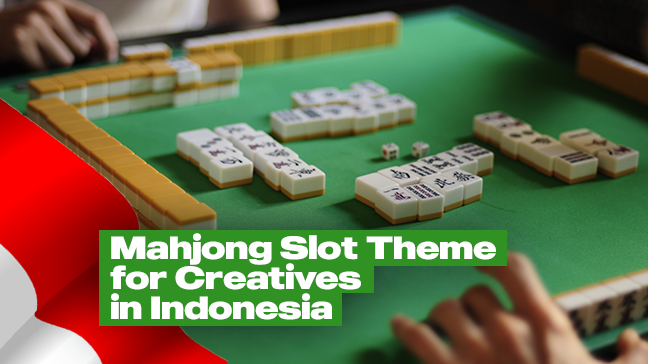
Mahjong is a strategic game for four players, where the goal is to be the first to collect winning combinations of special tiles. The main combinations include Chow (three sequential tiles of the same suit), Pung (three identical tiles), and Kong (four identical tiles). Gameplay requires not luck, but calculation, strategy, and analysis of opponents' moves, which has shaped its elite status.
Cultural Symbolism: From Confucius to Secret Societies
The popularity of the Mahjong theme in Indonesia has deep historical roots, tied less to gambling and more to intellectual and social status.
Historical Roots and Status
Legends attribute the creation of the game to either the philosopher Confucius or an ancient fisherman. But in Indonesia, the game took on a special meaning. During the rule of President Suharto (1966–1998), when strict restrictions were in place, Mahjong was extremely popular among the Chinese community and the elite.
Mahjong as a Symbol of Nonconformity
Mahjong parlors were used by opposition intellectuals and businessmen as a cover for secret meetings. Later, in the 2000s, private women's clubs were formed where the practice of gambling, including high-stakes Mahjong, became a form of protest against patriarchal norms. Thus, in Indonesia, Mahjong is a symbol of strategic thinking, elitism, and a subtle game against the rules.
How Has Mahjong Shaped Player Preferences?
The historical perception of Mahjong as an intellectual game directly influences which slots become popular today.
Demand for Strategy and Control
Mahjong is a game where the player influences the outcome. This explains why, according to statistics, around 60% of Indonesians choose gambling games where they can make decisions. They are not looking for passive reel spinning but an opportunity to demonstrate skill.
A Love for Complex Mechanics
The experience of playing Mahjong, where one must track many tiles and combinations, has fostered an interest in complex, multi-layered game mechanics among Indonesian players. Simple slots with a single bonus feature quickly bore them.
Recommendations for Gameplay and Creatives
Understanding player psychology allows for the creation of more engaging products. Indonesians are prone to constant choice-making, which speaks to their cultural connection to games requiring an analytical approach.
It is recommended to implement non-linear gameplay:
- Mechanics with managed risk (e.g., choosing to increase a multiplier with the risk of losing, or taking a smaller guaranteed win).
- Bonus rounds with alternative completion paths, where the player's choice directly affects the final prize.
Examples of Mahjong-Themed Slots
Many providers successfully use this theme, creating products that resonate perfectly with the Indonesian audience:
- Mahjong 88 (Play’n GO)
- Mahjong Ways / Mahjong Ways 2 (PGSoft)
- Mahjong Wins (Pragmatic Play)
- Mahjong Rich Ways (CQ9 Gaming)
- Street Mahjong (Espresso Games)
- Mahjong Fortune (Naga Games)
Share
